There are two terms that you'll come across in connection with tax changes in recent years.
One is BEAT and the other other is BEPS.
I'll start with BEPS first.
It stands for base erosion and profit shifting.
It's part of a global OECD initiative to stop companies avoiding tax through things like transfer pricing and interest deduction.
BEAT is the American terminology, stands for base erosion and anti-avoidance taxes.
This is broadly similar to BEPS, but it's more extensive and part of the administration's tax reform.
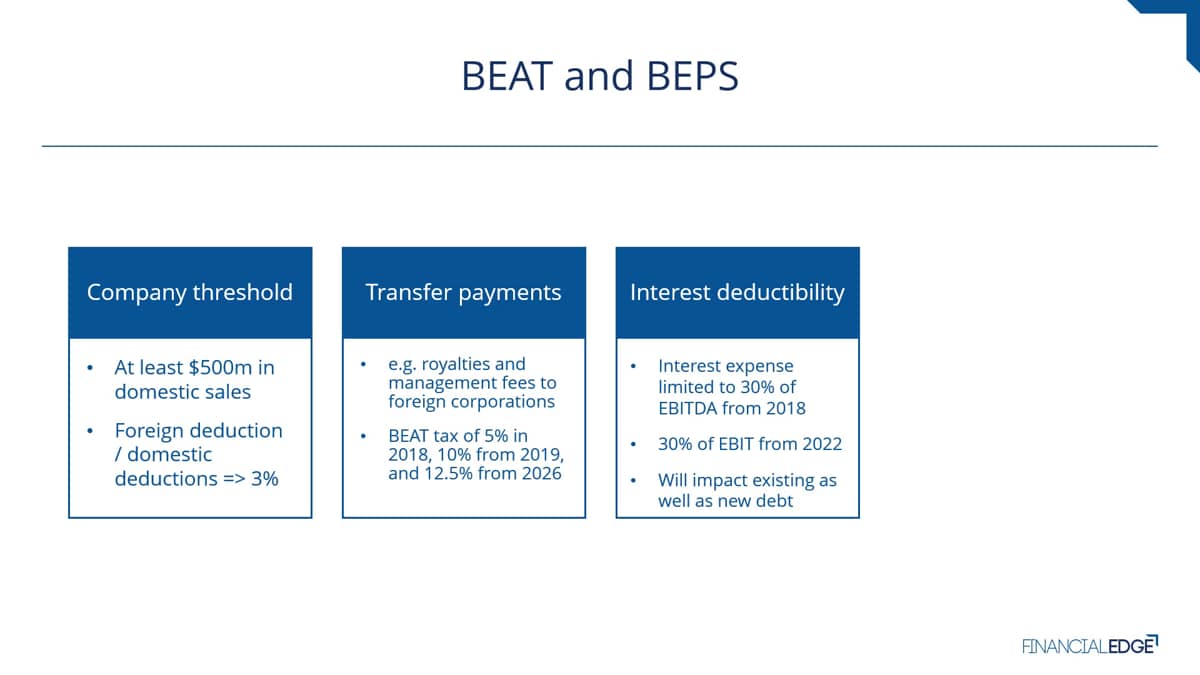
There's a few things to note. First, this is generally for pretty big companies. We're talking at least 500 million sales and companies with significant foreign operations.
The transfer of payments, this is relates to things like royalties and management fees to foreign companies, and this is trying to stop people moving profits away from high tax jurisdictions to low tax jurisdictions from things like license fees.
For example. Starbucks charges a license fee to use their brand name for the overseas operations.
And you can see there different tax rates against these transfer payments.
Probably most important from a banking perspective is the interest deductibility from 2018.
Interest deductibility is going to be limited to 30% of ebitda, and that means EBITDA on a taxation basis rather than a gap basis.
There shouldn't be too many differences for most industries in that calculation, though in the United States, unlike the rest of the OECD, that's moving to 30% of EBIT by 2022, and this is going to impact interest expense of both new and old debt.
So in summary, this is part of a global initiative produced by the OECD, and you're gonna see a lot more tightening up of things like transfer pricing and interest deduction.