Let's take a look at the accounting for finance leases under IFRS and US GAAP. There are some differences to do with what type of assets can be lease between IFRS and US GAAP, but the mechanics of the accounting is very similar. So we've had some key assumptions here. We have an asset which costs 90 million. We expect it to last for three years, and we have an implicit interest rate to release of 5%. Now there are some differences between what interest rate you use if you can't get the implicit interest rate between IFRS and US GAAP. But both would use the implicit interest rate for the lease if it is available. We've calculated the lease payment using the payment function in Excel, and we've come up with 33 million, and that's on the basis that the lease is paid in arrears i.e. at the end of the year. Note that most leases are actually paid upfront, so prepaid, but it makes the math easier to assume that it's paid at the end of the year. So the lease liability on the balance sheet starts at 90. And then we calculate interest each year by taking the implicit interest rate, which is the IRR of this lease, multiplied by the beginning balance. And we do that in every year. So this you can see in the first year, the accrued interest is 4.5, but it drops to 3.1 as the beginning balance drops because we're using the same interest rate, the cash payment for the lease is exactly the same. It's going to be 33 million in every single year. And so the ending balance drops. So this is a standard present value finance calculation and it's using the effective interest rate. The leased asset on the balance sheet goes on the balance sheet at 90, so at the very beginning, both the asset and the liability match. However, in time, the leased asset is depreciated typically on a straight line basis. So in this case, the depreciation expense would be 30 each year in year one, two, and three. And the leased assets at the end of year three is zero, and the least liability at the end of year three is zero. But notice that the balance sheet in year two does not balance, nor does it at the end of year one. The income statement will then pick up the accrued interest that's being expensed in the lease liability and the depreciation with which is being expensed as part of the lease asset. And they will go into the income statement in the interest expense lines and the depreciation lines. And if you sum up the total interest expense over the three years and you sum up the total depreciation expense over the three years, add them together, that will equal the total cash payment over the three year period. Now you may be wondering why we can have the lease liability ending balance and the lease asset ending balance not match. Well, that's picked up because the depreciation reduces the lease assets and it reduces retained earnings. The accrued interest increases the lease liability and reduces retained earnings, and the cash payment reduces the lease liability and reduces cash. That's why everything stored balances.

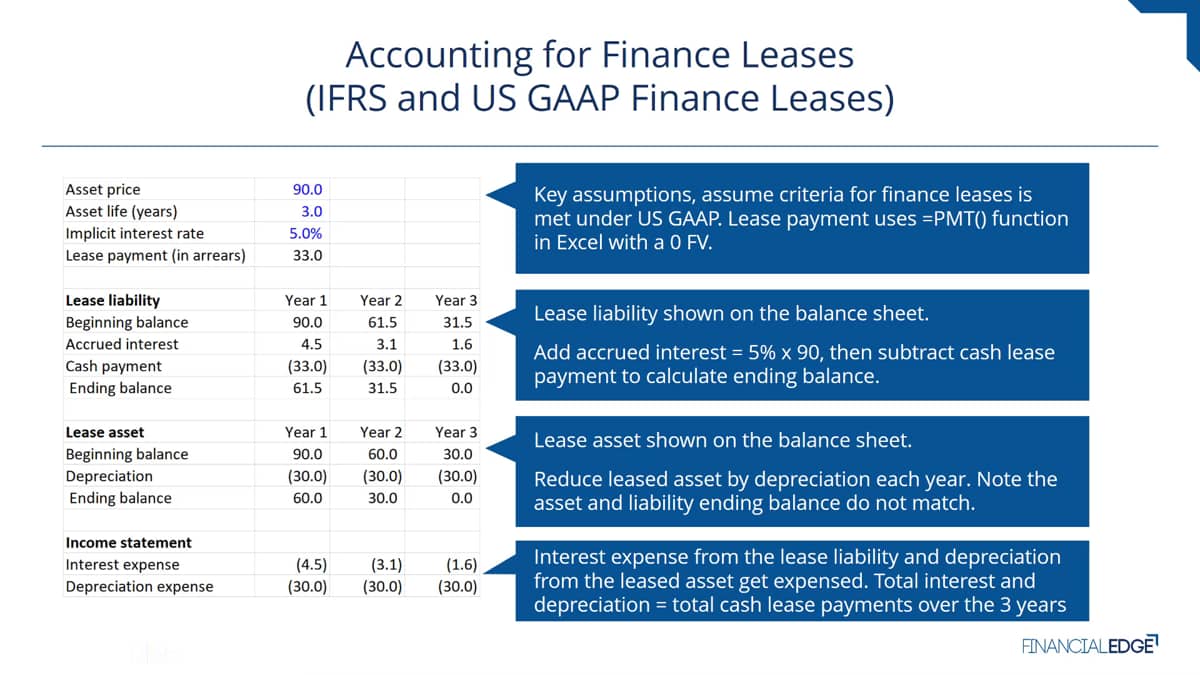
 Accounting for finance leases example