Will AI Replace Wall Street Investment Banking Analyst Jobs

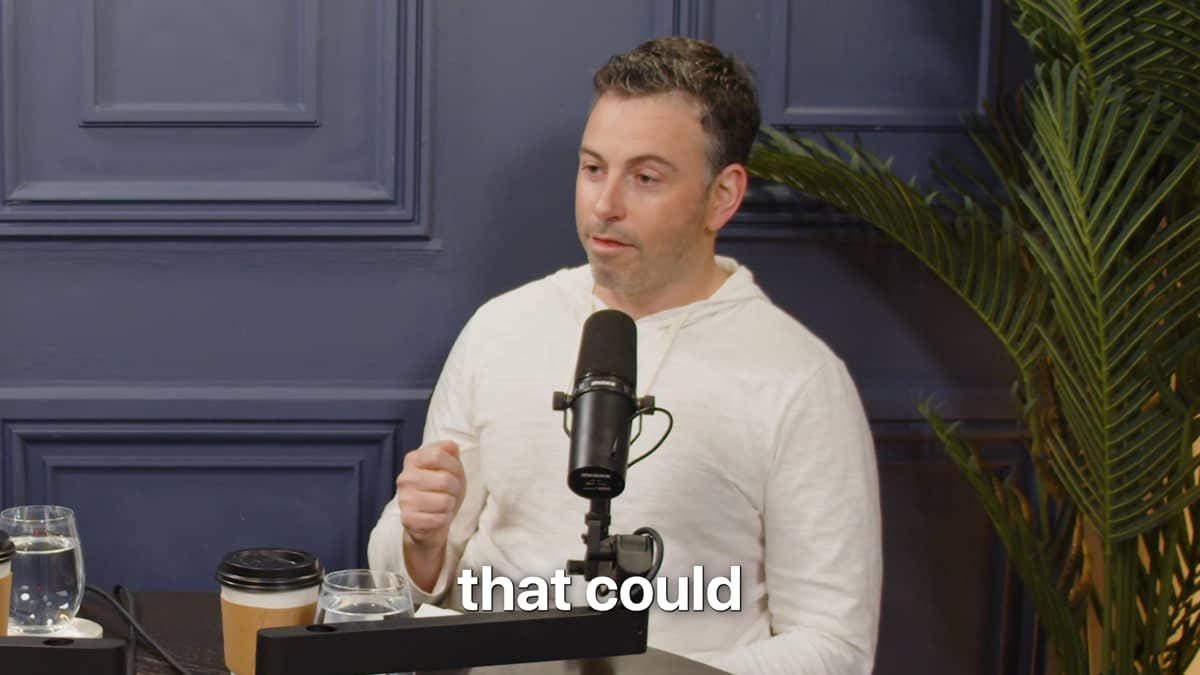
- 48:56
A podcast discussion between Wall Street Prep Founder & CEO Matan Feldman and Graham Smith examining the current state of AI in investment banking, whether analyst jobs are genuinely under threat, and what aspiring and current bankers need to do to future-proof their careers.
DISCLAIMER: The information provided in this video is for educational and entertainment purposes only and does not constitute financial, investment, tax, or legal advice. Investing involves risk, and you may lose some or all of your capital. Past performance is not indicative of future results. Please conduct your own due diligence or consult with a certified professional before making any financial decisions.
Downloads
No associated resources to download.

Transcript
It feels like this is all moving so fast.
Today, that could materially change seven days from now.
To your point, you never would've even expected that Claude or GPT could do all this stuff.
Tools like Claude and others like Shortcut and ChatGPT has come out with a really major improvement over capabilities in Excel.
How you think the analyst role is going to change, if at all.
AI is not good enough today to do anything.
Because even 20 years ago, we had tools that would automate a lot of this process.
So a huge part of the work is- Hey, everyone. Welcome to this week's episode of "What's the Big Deal?" I'm Graham Smith, and today I'm here with our founder and CEO, Matan Feldman. Matan, how's it going? Good. Nice to see everybody.
So today, this week, we're not talking necessarily about a deal in the market. We're talking about more of a market phenomenon right now. And we've kind of highlighted this and touched on it over the last couple episodes, but really on the note of we've been talking about this AI software scare trade. Today, we want to talk a little bit more generally about AI in finance and what we think the impacts of AI might be on some analyst roles and some junior finance roles, how that's going to impact the market over the next coming months and coming years.
It feels like this is all moving so fast.
Matan, you've done a bunch of work in terms of all the AI tools.
You've got a bunch of connections to all the investment banks, so I think you're pretty well-versed on the topic, and I'm excited to talk about this a little bit today.
Likewise. Happy to be here. Excited to talk about it.
So you have put out a bunch of content, some blog posts and videos recently reviewing some of the AI tools.
So why don't we kick off by talking about just where we think the market stands right now, acknowledging this has moved on a lot, even in the last couple years.
Right? Two years ago we had, what, ChatGPT.
There was no kind of Excel add-in. It was fairly basic. Now it feels like we've got a lot more focused, bespoke tools that can really start to tackle the job of a junior professional. So where does this all stand right now? Yeah. It's a good framing because if you were to talk about this two and a half years ago, I remember talking to a friend and saying, "This'll never hit Excel." Excel's just too complicated. It might be able to get the coding, but there's just too much going on. It's a visual thing along with coding, and we're now at a place where the progress is so fast that if you do an evaluation of where these tools are today, that could materially change seven days from now.
Yeah.
That is the sort of level and pace at which things are changing. So in terms of the current state, and I'll focus on Excel and financial modeling in particular.
It's a very important workflow for our clients and that's one we spend a lot of time looking at. Today, the tools that are out there, and there's been a real massive uptake in certain capabilities really since Opus 4.6 came out and Claude- Yeah ... Claude came out with that model.
Today, tools like Claude and others like Shortcut and Index, and now ChatGPT has come out with a really major improvement over on its capabilities in Excel, really at the level across a lot of variables of a poor- ... poor investment banking junior analyst.
It's almost as good as a poor analyst, and we know that because we actually ran all these tools through the gauntlet of assessments that we put our new hire- Yeah ... trainees through. And there's a whole rubric of how you can evaluate those analysts and it's kind of creeping up.
It is almost as good as a poor analyst.
It is still, though, almost as good as a poor analyst.
Right. Well, and I guess you've got to be pretty good to be a bad analyst even to have gotten the job.
So that's a certain benchmark you're reaching already.
So the fact that it's even at that point now is kind of impressive, actually. Think about this. A couple years ago, to your point, you never would've even expected that Claude or GPT could do all this stuff, and here we are.
It's beyond impressive. It's actually mind-blowing.
And again, the qualifications around all of that is that even a poor analyst is a super agent.
Right.
That these things are not. A poor analyst can go and have conversations and write emails and do a whole bunch of things that these tools are only now starting to have the capability of doing.
Yeah.
They're nowhere near that kind of capability yet.
But when you're looking at sort of specific workflows, it is mind-blowing that it can do the work of a poor analyst because to your point- Yeah ... it is really, really hard to become an analyst.
Even the worst ones had to go through a gauntlet of interviews and learn a lot.
Yeah.
So it is quite impressive.
Because I've played around a little bit with these tools, and admittedly, I've got to do more because, and we were just talking on the walk over here, so many clients are asking about AI training and integrating an element of AI into normal training programs. From your perspective, the work you've done so far, what are the things that these tools do well versus still have some improving to do? So good question. There's a lot that it does well, and there's a lot of work that still needs to be done to make them truly hyper-productive. So in terms of what it does wellThey're much better at getting a model, for example, or an analysis done from scratch.
Yeah.
So if you were in a scenario, and by the way, this isn't the most common use case in investment banking where you just sort of start with a clean slate, and you have to- Yeah. You're usually using a template, right? You're usually using a template. Although I will qualify even that. It is good at starting things.
Yeah.
So even if you feed it a template that's empty, or if you give it guidance around some existing template, or you say, "Let's start something from scratch," it's really good at that first step.
Yeah.
It's really good. It is not yet taxed by too many prompts, by too much overlapping context, and it just gets the job done. There's another qualifier to that, which is it is not incredibly good at grabbing data without very clear guidelines about where that data should come from.
So for example, it'll try to do the job where if you ask it to build a model or repurpose it or restart a template and put in new data, you do have to upload source files. You do need to direct it.
Okay.
If you don't, you'll get some hallucinations that are actually- Yeah ... a little dangerous because the way it hallucinates is different from how a poor analyst hallucinates.
And it's- Adds some extra zeros or...
Well, it's interesting. It'll do weird things where if an analyst makes a mistake in a model, a lot of times what that looks like is kind of predictable. You had a typo somewhere, and that changes the subtotals.
There's maybe a conceptual error that, again, we've kind of been habituated, associates, VPs, MDs, have been habituated to sort of notice where errors come from.
Yeah.
These errors are a lot more like, "Well, I'm going to get the subtotal right, but I'm going to sneak in a mistake to make the subtotal right." Okay.
And it's different, and it's going to take a little bit of getting used to if you're auditing these kinds of things.
But broadly, that's what it's good at. It's good at starting things.
Yeah. Okay.
It's not so good at finishing things.
Right? So when you start working with it and iterating, there's a whole bunch of issues that are still there that haven't been resolved.
There's a certain point where you just say, "Okay, I've asked it, I've re-prompted it 10 times to try to solve a whole bunch of things." It starts losing sight of the original context. It starts- Which I feel like is like, I've experimented with plenty of just AI prompting in general, not just for Excel, and that I feel like is a common feature of a lot of these tools. Right? You say, "Oh, what about the thing I told you six prompts ago?" And then it says, "Oh yeah, good point.
I forgot about that." Yeah.
And you're like, "You're not supposed to forget.
You're a computer." That's right. So that's a big thing.
That's what sort of keeps this-- This is, by the way, an issue with code as well, and a whole bunch of other things that it does, that it's not that good yet at keeping track of all these things it does.
Yeah.
Claude, for example, if you're having conversations with it, will run out of memory, for example, for its conversation. You've got to start a new one.
And there's a whole bunch of the friction that's created in these tools that make it actually fairly unusable at a certain point- Yeah ... if you ask too much of it. And by the way, it wants you to ask a ton. It pretends like it can do everything.
It's not like, "Guys, this is too much.
Please stop asking." Right. Yeah. It's like, "What do you want me to do next?" And it's like, "I want you to finish this correctly." So it- That's basically it.
That's it. And so it's quite tempting, I think, if you don't really understand where the boundaries are of its real capabilities, that you ask too much of it.
Yeah.
You then give up because it's failed you, and then you don't use it again.
So there is a sort of a Goldilocks state where if you really know, and what's challenging about that is that these tools are changing all the time, so you have to know as of the moment- Right ... what are its capabilities. If you sort of exist in that state and can prompt it and kind of start on your own, fork off on your own when the time is right, you can actually get a lot of productivity out of it.
If you ask too much, you will, at some point, kind of wipe your hands clean of it and say, "It's just much better for me to just do it myself." Yeah.
No, I'm thinking back to my analyst.
We were analysts, I guess, about the same time, as in a long time ago, right? Yeah.
But even a long time ago, I feel like we had some tools that made things halfway productive. I'm thinking things like Cap IQ and FactSet, and I remember building models when I was an analyst where you had a bunch of inputs that you could have Cap IQ or FactSet refresh.
You get your consensus EPS estimates, your margin assumptions, the main things. Because there aren't necessarily that many assumptions that you need to build a functioning, say, three-statement model. So even 20 years ago, we had tools that would automate a lot of this process. I think from just thinking about the aspects of the job that are trickier and require a lot more thought, it's going through the 10-Qs, the 10-Ks, pulling out some exceptional items, really going through and sense checking, "Hey, can I use these estimates that I'm pulling from FactSet, or do I need to make some kind of adjustment to account for a one-off transaction, a business combination?" Whatever that case may be.
Are these tools, in any way, shape, or form, okay at that kind of stuff? They're okay at it.
Okay.
Actually, yeah.
Okay. That seems like a huge time saver.
It is, yeah. So we've been talking now about financial modeling and sort of that rote work, but you're right in sort of elevating that there's actually a whole bunch of things that investment bankers do that's arguably more important and time-consuming than the mechanical work.
Yeah.
And that's just one example.
So a huge part of the work is...
judgment around what I need to pull out of documents, what's relevant, what's not. And actually these tools are pretty good at identifying that. And so especially if you feed it, for example, documents and prompt and frame what you're looking for the right way, it'll significantly increase. If you're saying, "Hey, I want to make sure that I've got..." And I'll just give you a very simple example that should make sense to anyone that's sort of in the finance world.
I need to really figure out what is the company's clean normalized EBITDA. So look for any sort of adjustments in this press release, look at this conference call transcript, and try to identify anything that might need to be pulled out. It'll be pretty good at that.
Okay.
It'll find those things and because it's not perfect, you still have this really important function of the analyst to actually understand this really complicated concept- Yeah ... in investment banking, which is what is the core number around which these businesses are going to be valued on? And how do I find the cleanest EBITDA? And obviously those of us who have been living and breathing some of this stuff, real EBITDA is always a moving target and different constituencies have different motivations for that. So you need to really leverage.
You can leverage these tools, but you need to understand the underlying concepts yourself because they're not good enough to just do it on their own.
Well, and I think that's probably a nice segue into the next topic, which is kind of trying to think about how you think the analyst role is going to change, if at all.
Right? Because the tools available now are interesting enough to be able to help analysts with some of the job.
So it feels to me like an important part of the analyst skill set is you still have to know how to do all this stuff.
You still have to know how to do it manually, because ultimately you need to check all these figures, sign off on it, and as you're an analyst kind of moving up the org chart, you always need to know what the right methodology is for calculating all these figures.
So, but how do you think this is changing both the analyst work today and also, let's say you're a new grad coming out of school, you're thinking about a job in investment banking.
What impact do you think these tools are going to have, if not today, in the next couple of years, on your recruiting pathway, the skill set you need in order to be successful? Yeah. That's the million-dollar question- Yeah ... in this industry, and I suspect in every industry that is being changed by AI.
So the way I would look at this and what I would tell folks that are looking at this industry is if there is no demand change, right? So in other words, if investment banks in 10 years did the exact same thing that they do now, in the sense it's the same number of deals that are out there, the same kinds of opportunities, the same types of sort of capital-raising opportunities that exist, then there is going to be an encroachment of AI on the bottom of the pyramid because you're going to have financial modeling work, pitch book work, email communication, all that sort of mechanical work is going to get much more productive by AI.
That's almost inevitable in the next 10 years.
Literally, that's starting to happen.
I will caveat that by saying AI is not yet at a point, and none of these tools are yet at a point today, as we sit, today's March 2026, you cannot get rid of any analysts right now with AI and actually get the same job done that you would've a month before.
Yeah.
The cautionary tales here are like you would've thought a year ago when Klarna fired whatever, 700 support folks and brought in AI and immediately rolled it back because they're like, "It's just not good enough." AI is not good enough today to do anything that really replaces analysts. Now, so we're talking about the next 10 years.
Yeah.
And we don't know exactly when that lands, when it gets good enough to disrupt these workflows.
I think if there was no change in demand, if it was all just we have the same static amount of demand of what investment banks do, you will have basically a flattening of the pyramid, right? So the investment banking- Yeah ... deal team structure is you have one MD, you have maybe a VP supporting it, maybe two.
Then you have three or four associates, and then you got large armies of analysts that are supporting the deals with all the rote work that has to get done.
Inevitably, if the demand side is bound, that will flatten.
But that's a big if. My view is that the demand side of what investment banks do, you have to think about who investment banks serve.
I run a company. Wall Street Prep is now in the midst of two acquisitions.
We're switching over from more, let's call it startup-y kinds of- Mm ... financial controls to an ERP system and- This is a real company now.
It's a real company.
Yeah.
And we have a whole bunch of KPIs that we need to track in real time, and we have systems that we need to build up.
AI, so this is the demand side. AI is going to improve all of that over the next 10 years, make it much simpler, make it much easier for a company like Wall Street Prep, that's been around for 22 years, to have done that way earlier in its life cycle.
Yeah.
Well, what does that do? Well, that makes a lot of companies much more transparent to capital.
Yeah.
It makes companies much more capable of presenting themselves in a way that exposes them to capital markets in ways that never existed before.On the demand side, there's a whole world of product innovation that we haven't probably thought of yet, that exists but hasn't really scaled.
And I think that is an inevitable sort of consequence of what's happening with AI.
And so when you think about what your job is in investment banking and what's going to happen, if you were thinking statically about, well, I've got one deal that I have to work on for the next several months, yeah, AI could probably reduce the number of analysts.
Yeah.
But if you're thinking about, I'm going to serve eight deals and I'm going to have continuous advisory services to my clients because now that is available, I actually think we could see a complete sort of counterintuitive flip where we don't have enough analysts.
Now, are those analysts going to be doing the same thing that an analyst in 2026 is doing? No. That role is going to shift.
You are going to be doing much more associate-level work, judgment-type work, moving up the way, for example, a pilot has moved up, where they're no longer making manual calculations about what's going on.
Yeah.
They're looking at their controls. So I think the industry is going to shift.
I think this is going to be a very healthy industry because I don't actually believe the demand side is not going to-- I actually think it's going to surpass the supply productivity for the next 10 years.
It's interesting to think that, because I was in the startup world for a little bit, and I think about when I was doing that, say, five, six, seven years ago, none of these tools existed, right? So you're capital constrained, you're resource constrained.
You can't do necessarily as much as you want to.
Think about if you're starting a new business today with all the tools you have at your disposal to really help make your life easier, to your point, once you reach some scale, really reach that professionalization mark a little bit earlier. It's really interesting to think about how that demand increase on potential investment banking services, just because you've got more companies reaching that threshold a little bit earlier, is actually going to be a real game changer for this industry overall.
Now, do we think, I guess this is more on the topic of what investment banking might become.
Do we think a lot of the big banks are going to start moving down market and servicing more mid-market clients just because this is going to be a new source of deal flow? Do you think you're going to have sort of new startup mid-market, more lower mid-market investment banking shops pop up? How do we think that overall landscape is going to change? Yeah. So now we're sort of getting into the-- I guess we've been prognosticating for the last several minutes, but I think so.
I think it is inevitable that banks build up the capability through these AI productivity enhancements to go down market.
And it's just not profitable right now for a bulge bracket investment bank to go after $20 million EBITDA businesses.
Yeah.
It's not profitable for middle market investment banks to go after sub $20 million EBITDA businesses.
That all changes. I think it's inevitable that the minimum viable deal size starts shrinking down, and if you're talking about a pyramid, you've got massive amounts of companies representing massive amounts of revenue and deal fees. And again, I'm just talking about advisory.
There's also capital raising. There's debt and equity and all the securitization that can happen when you have so much more transparency at that bottom rung of businesses that in aggregate represent much more opportunity than the business is currently being served by capital.
Yeah. I think it's really fascinating just to think about how this market might get a little bit more exciting in the sense that you've got more companies having access to capital markets, more companies that can be represented by investment banking services. I think in some ways, it's actually to think five, 10 years down the line, it's kind of an interesting, exciting time that you can kind of imagine.
But I do think we're still going to be in this world where if you look at the way investment banks are structured, probably going to see shifts in terms of some analyst jobs maybe being replaced with some technology.
I only say this because I'm thinking about my experience.
So I started at Lehman Brothers back in the day, and I remember I started in LA, I moved to London, and at that point, I want to say in 2006, Lehman was building up an offshore analyst program in essence.
And they were looking-- I didn't put my hand up because I had just moved to London, and I'm like, "No, I want to stay here for a little bit." But they were looking for people to move abroad and lead a team of offshore analysts to start doing some of the work that was seen as some of the most basic in terms of the modeling. So pulling the data together, all the stuff that in theory you can ship offshore. I can see that kind of stuff being replaced with AI or investment banks wanting to replace some of those roles with technology.
It feels like that maybe has started to happen already.
If not, is soon. You probably have a better view on this, just knowing more of the banks.
So it's interesting. Around that same time, yeah, we were also seeing it. You have BPOs, companies abroad spreading comps and doing all kinds of work.
Yeah.
Because CapIQ made that much easier, and there's a lot of rote work.
I do think that happens kind of at a low simmer, and has been happening at a low simmer for 20 years.
I do anticipate that AI will actually make that even more pronounced. But I will say back in 2006 when they were really experimenting with that, a lot of businessesSimilar to the Klarna example, kind of scale back.
They were like, "This isn't working." Right. Yeah That's not to say that it never works.
There is work product that has been done really well by the BPOs and with the outsource model. But it hasn't worked as well as back in 2006, people were expecting it to work, which is an interesting point. I would say that what's now a cliché that you hear over the last couple of years, which is, "AI won't take your job, but someone who knows how to use AI will take your job," is, I think you originally asked the question of what advice or how do you talk to future analysts or prospective analysts? I do think that in the near term, and the near term is the next several years, right? It's not the next several months.
Yeah. Well, the time frames do seem to be compressing, right? Because we're talking about difference between 2006 and 2026 now. I don't think we can continue to look out another 20 years.
No. Right? I think you're right. Not a few months, but a few years, things could look a little bit different or materially different even.
Yeah, I think everything's going to be materially different in terms of the work product, even as early as a year from now, because I think, again, the tools are good. But in terms of how the work will be, the work product in investment banking, if I'm a betting man, does not look materially different in a year.
Right.
Because they're just not good enough yet. Even as good as they are, they're not good enough yet. And here's the other thing that happens.
Adoption at banks is actually fairly challenging to build up. So Copilot, for example, has a massive advantage at banks.
It may not be the best tool right now, arguably is actually the worst tool.
It's the worst, yeah.
But that's the one that banks have piloted first.
That's the one they've deployed first.
That's the one that can handle material, not public information, that could sort of create the guardrails that are needed.
Is that just because it's bundled with Microsoft Office and it's a well-understood product? It's got a massive moat- Yeah ... around it that none of these other tools have.
So, there are time lags around deployment of these tools.
There are limitations on what the state of the art is, and while Copilot will catch up, since we did our evaluation of the modeling tools, like ChatGPT caught up. We had Claude significantly ahead of ChatGPT. We had another tool called Shortcut, which is a smaller platform. But again, these tools are much more difficult to get into the banks.
Copilot's got a massive lead, so these things take time. These things take time, and then people need training on how to use them. And so it goes back to the point of if you are really good at using these tools right now, that's the real capability that will set you apart.
So if you're going into an interview right now for investment banking, and you have demonstrated a real aptitude for and a real interest and passion for these tools, that's actually really, really important because there is no tool today that gets the job done.
It's actually the tools of tomorrow.
And what most employers, and this isn't just investment banking, this is, I think, most employers across every industry that has the potential to be more productive from this, is you're looking for people who are really into it, and it's really hard to just keep up with everything.
Yeah.
Time-consuming. It's actually crazy-making to just keep track of what's happening. So the people that are doing that and really get into it, those people have significant advantages in the market now.
And I imagine, I would think you have to have both, right? You have to have an interest in all these tools.
When I say both, the interest, but you also still really need to know how to fundamentally do the job, right? Because I don't remember who was saying this or if this is kind of a general theme kind of going around right now, but if you've read about some research suggesting that the young generation now, like kids being born today, is going to be the first generation that, for lack of a better word, is dumber than their parents because they rely on AI for everything.
Right? If you're going into a job in investment banking where being accurate, being right is paramount, you still need to know what the tool itself is doing.
Right? So you've got to have the interest, I think, in the tool, but you also need to make sure that what it's spitting out is right.
Because I'm just thinking about, we talked on a previous episode about Warner Brothers, Netflix, Paramount, Skydance, that whole acquisition.
You've got some of these investment banks who put fairness opinions together, which is, you can almost make an argument, just kind of spreading comps, right? Yeah.
Just making sure, do we have the right comp set? Are we doing this correctly? You're getting paid a ton of money.
The fees going around were like $90 million for a fairness opinion. Right? The most important thing in that is that you're right.
And in order to be right, you've got to know what these tools are doing. Can you imagine a world in which that fairness opinion came out, and it was Claude's Excel tool that had run the comps, and everyone said, "Yeah, okay. This is good. Let's print it and go"? Yeah. So I think that is the point. That's the most profound point to make, which is as long as humans are in the picture, right? Yeah.
As long as humans are in the picture, in terms of making the decision about whether we want to sell our company or we want to buy a company or whether we want to raise capital or not.
As long as those decisions are made by humans, that trickles down to the service providers and those that deliver that. Those are the investment banks.
Analysts now have a much taller task, which is they not only need to know how these tools workBut they actually have to also keep track of, and in a way, it's actually harder to keep track of the underlying basic concepts.
So in the same way, I'll go back to the pilot example.
If you're a pilot today and you're just relying on your controls to fly the plane, you actually have to stay sharper on how to fly a plane because you're not flying it all the time.
Yeah. You're not doing it all the time. Yeah.
And if you don't do that, you're not going to be able to understand or work with, just now going back to the AI example, you're not going to be able to get good work product out of it.
So in a way, there's an analogy here, which is when I started Wall Street Prep, I thought I knew accounting and I thought I knew financial modeling.
I'd spent four years at JPMorgan, and I was doing it day and night, working 100-hour weeks as you were.
And we all know how difficult that is and how smart you feel when you're done. I really know this stuff.
Yeah. I'm the best.
Well, then the humility came when I had to deliver my first accounting training program at a bank, and I was like, "I don't think I know it to the level that I thought I did." And that came with having to teach it.
Mm-hmm.
So teaching is actually a well-known way to learn- Yeah ... and identify the gaps that you have in your own knowledge.
The analogy here is that in order to spot and use AI really effectively, you actually have to really understand the underlying concepts.
There's a massive risk of atrophy or lack of development that you're alluding to. And that is the message to people who are trying to break in. If you want to work with AI and you want to get really good at it, you build a model from scratch.
Let's just go back to the modeling example.
Build that model from scratch, even though you're not going to have to do that on the job all the time. The lessons there are massive.
And then compare it to have AI build that same model from scratch. That's a new learning framework.
And then you're getting both the reps of how to do it from scratch, and then you're getting the reps of, okay, well, where's AI messing up? Where am I messing up? And you start cross-reference.
That's a great way to think about this.
So now you have to do two things, whereas before you had to do one.
Yeah.
That is a huge part of the risk, that we just get dumber and dumber.
We rely on these tools, and that's a huge part of what a training organization has to be on top of.
Right.
I think the clients we work with are hyper-focused on that issue, that we have this great copilot, and I mean all those tools, not just Microsoft Copilot, now in our hands.
But we cannot fall asleep literally at the switch because this thing is not ready to work without us.
Right. Yeah. No, I think it's great advice. Actually, I think about a lot of the training and teaching I do. One of the things I like to do is I do a lot of LBO stuff because I worked in credit investing, but in particular backing LBOs for basically a decade. And one of my favorite teaching tools to use there is a short form from scratch LBO model.
It doesn't have all the bells and whistles.
We kind of go through and we build it together, give the class assumptions, and say, "Okay, here are our sources and uses.
Let's talk about where everything comes from.
Let's build a full cash flow debt schedule, all the stuff." But you're building it from scratch, so you know how it gets pulled together.
And I think that's a really useful exercise to go through anytime you're kind of looking to study for an interview, learn something new. Actually going through that basic exercise, way more valuable, I think, than taking a big template that's put together and getting Claude or ChatGPT to help you fill it out.
That's not really going to teach you the core fundamental concept of what's actually going on.
100%. And it's so tempting to do it the opposite way.
It is. Yeah. It's so tempting to just have Claude, to just kind of submit to the tool.
That's what it wants you to do.
That's what it wants you to do, and it's not ready to take over yet, but it wants you to submit.
Exactly.
And it's not the right way to build a career right now. So that discipline, especially for younger people who are trying to break into the industry, it's this interesting dynamic where to your point, there's so many amazing things happening right now.
There's so much career opportunity.
You need a lot of discipline. It's almost equivalent to don't go on TikTok or Instagram and waste your brain. Spend the time to do the work that'll take your career to the next level, and that really is now double the work.
It's I got to know the underlying concepts, and I have to understand how these tools work.
Yeah.
So we've been talking a lot about how in some ways, actually, the analyst role is probably relatively protected to some extent, at least over the next few years. It's going to change.
You're going to be using these tools, but we're still going to need investment banking analysts. You still need to know how to model and do all the technical stuff.
What about other areas of finance or other roles within banks? Do we think there are other kind of business units or business lines? I can even think about maybe some investing roles where you're investing just on purely market technicals and fundamentals, where you think, "Hey, actually, maybe Claude, GPT, whatever, could do a lot of that job pretty well, if not today, then not too far from now." For sure. So interesting.
What we're getting out of ourclients now in terms of level of engagement. The investment banking divisions are actually getting the most adoption, the most engagement- Yeah ... out of a lot of the other divisions.
That said, there's a whole sort of buy-side world and an investing space where the same disruption is happening. So I was in investment banking in the M&A group at J.P.
Morgan for a couple of years, and then I moved over to sell-side equity research group, and I covered food and drug- Yeah ... entails. And we covered 10 companies.
Right.
And we didn't cover 10 companies because there were only 10 companies to cover. We covered only 10 companies because that's the most you could cover given how much time it takes to maintain the model and- Yeah ... have the conversations with buy-side investors, and to put out the notes every time something material happens and ingest all this information.
So it goes back to supply and demand, right? It's the same opportunity, challenge, disruption.
There's a whole world, there's a whole coverage universe of companies that exist today that could expand dramatically.
Yeah.
You could do a lot more than you could before with these AI tools.
And again, when I say you could, I'm speaking present tense, but in reality, it's actually, I suspect that you'll be able to.
You're already kind of able to do more- Yeah ... but over the next several years, you'll certainly be able to do more.
And again, without being overly creative, you just have to think about the existing limits on how much analysis you can do and realize, oh, wow, these tools can absolutely maintain and track portfolios and companies and ingest changes and improve the model, put out the notes, and have you just take a look at it as an overseer as opposed to the originator of the content.
So it's the same thing to me.
Yeah.
These are huge opportunities to improve the demand side of it, as well as take advantage of the supply.
But you have to, again, to your point, if you as an investor, as an investment analyst, are unable to understand the underlying issues, these tools don't really serve a purpose. You can't do anything with them.
No. If anything, it's quite the opposite because you will just, at that point, you'll take the output from whatever tool you're using, assume that is correct, and run with it. And then few days, months, years down the line, learn that there was some mess-up in there you didn't know about, and all of a sudden you've got a really big problem.
Yeah. And that's exactly right. And I'll just use, again, my own experience in the sell side. If you cover CVS, CVS was a standalone, basically a pure drug retailer back then when I was- Yeah ... covering it. Right now it's a giant business with a whole bunch of other healthcare businesses attached to it.
But back then it was a pure drug retailer.
If you look at that company, which was a large company back then even, not as big as today, but was large, was covered by 15 investment banks.
Right.
And they all had different views on that. There's some folks that thought it was a buy, some folks thought it was a screaming sell, and those are all valuable insights to the buy side community.
Yeah.
AI doesn't just converge to one-- The issue here is that even in that example, if you asked AI to tell you whether CVS is a buy or a sell, it today won't really converge to an answer.
Depending on your perspective on what's important, what's not important, your AI will come to different conclusions.
And I think the benefit here is you're just going to be able to do more of your own, what makes you as an analyst unique and thoughtful.
You'll just be able to scale that to a lot of different businesses.
Yeah. And maybe that means over time that there aren't as many roles or seats available in certain business lines because people are more productive, right? Instead of covering 10 companies, you're covering 50.
Mm-hmm.
Right? Just because at that point, you're reviewing the output, making sure it makes sense. Maybe you've even been the one to train the model and teach it your firm's specific perspective on life. So can you get a lot more out of the same analyst? Quite possibly.
As long as that analyst knows what's going on.
Right. Yeah.
That's the key.
So what, from your perspective, if we think about the overall kind of finance universe, do you have a view on what jobs you think are going to be safest, let's say, five years out? Because I don't think anyone-- The interesting thing about being in the world right now is if you're asked to make a prediction beyond five years, I think it's kind of tricky just given the pace of change of all this stuff, right? So, big picture, you can probably say, okay, investment banks are going to continue to be around.
We'll have people at all the different levels, all the big picture stuff might be relatively consistent.
But within the next five years, what do you think are the safest spots, and which ones do you think are potentially the most likely, not necessarily to go away, but the most likely to be more consolidated and have, instead of that 10 companies per analyst, be 50 companies per analyst, you just don't need as many people? So I think to your point, it's a really hard question to answer.
So I'll take the easier question. I'll make up my own question, and I'll answer it.What is the skill set that you're going to need when you're looking for work? Yeah.
And how is that going to change? And I think because these tools, I think for the next five years, are going to get really, really good at specific workflows.
I suspect they will still be limited by the ability to solve problems end to end. They won't be as good of an integrator as a human will be.
Yeah.
And so what that elevates is judgment, the ability to see the big picture, the ability to sort of orchestrate all of these tools together. And so that spans across industries.
So any task that today, any job function, any role that is really rote and mechanical, obviously, is going to shift. I don't even think it's about will that job go away? I think that job will evolve. Right? So if an investment banking, again, just going back to our audience, if an investment banking analyst today is spending most of their time building models, putting together pitch books, I don't think that job's going away. I just think it's going to be different.
I think that that person will be able to produce a lot more of that with these tools, but then their main job will shift to what an associate essentially does today- Yeah ... at a much higher volume. So I'm now looking at, again, 10 transactions.
I'm looking at 10 different opportunities. I am making judgments.
I'm telling my AI tools what to do. And so that skill set becomes the job.
It's different. It's a lot of what you end up focusing on through reps over the first two years currently of the analyst job.
Yeah.
And that's going to have to just get really accelerated and honed in on earlier and earlier.
And I think if I were graduating now and thinking about becoming an investment banking analyst again, there's a world in which I actually think you can see AI making this job a bit more exciting and a bit more fun.
Think about how we used to spend a lot of our time in those 100-plus hour work weeks. It's in PowerPoint, making sure everything is lined up perfectly, a lot of manual formatting on bar charts, making sure the waterfall chart is formatted perfectly.
If you can just say, "Hey, Claude, can you make this page look pretty?" Actually, one of the first things one of the VPs said at Lehman in LA was, "Can you just Alt+MP this?" Like Alt make pretty.
And I think we're probably getting pretty close maybe- Totally ... with some of those tools, right? And that does free up your time to do some of the more high-level interesting stuff. So I actually think there's a world in which being an analyst today is probably a bit more fun than it was when we were doing it.
Without question. I think to your point, 100-hour work weeks where you're 2:00 in the morning, you are lining up images and are worried that there's going to be a mistake, so you got to reprint the books.
Yep.
Those of us who have been there know there is nothing more soul-crushing than that experience.
Makes you question- What are you talking about? I loved it.
We all loved it. We all loved it. But that's exactly right. There's a world where, first of all, the work weeks are not 100 hours- Yeah ... but they're 60 hours.
Yeah. Big difference.
It's a big difference. Huge difference. Yeah.
And the job is so much more interesting.
Right now, the model is you build expertise through just model construction and rote formatting and rote work, and you just sort of through osmosis and those reps eventually let things sink in.
There's a world in which AI just really accelerates the process through which you can now do really interesting things much more quickly.
Yeah.
Those little moments where you're like, "Oh, I got invited to the pitch," and I'm listening to how the management team is thinking about this, and those are the best moments because you get to really experience that.
Those can be a huge part of the job.
Yeah, absolutely.
And so there is a world in which this is a renaissance for junior finance roles- Yeah ... as opposed to some doomsday nuclear catastrophe.
All right. Well, I think we're almost out of time.
Any final parting comments to anyone, again, anyone who is either in the analyst seat right now or is about to start looking? Exciting times. Embrace the change.
Just live in these tools. Don't forget the vegetables of actually how- Eat your vegetables.
Do Wall Street prep modeling courses.
Do Wall Street prep modeling courses.
But there are some really exciting-- What's the old saying? May you live in interesting times.
We are certainly living in interesting times.
They are indeed.
More interesting than any in our lifetime.
So if you're starting out, congratulations.
You're in the most interesting times in a long time.
Yeah.
Enjoy it, embrace it, and I think anyone that does that will have an incredible career right now.
Yeah. Awesome. Well, look, I'm sure more to come on AI in the future.
Obviously, this is a very quickly evolving topic.
In a year, this whole conversation could be completely wildly out of date. So I'm sure we'll come back- I'm sure it will be ... and we'll come back and refresh the thinking.
But until then, everyone, if you're out looking for a role, good luck in the hunt.
And yeah, do all your Wall Street prep modeling and training courses to get ready.
All right.
Awesome. Matan, thanks so much. It's been great.
And everyone, we'll see you for next week's episode of "What's the Big Deal?" Until then, take care.