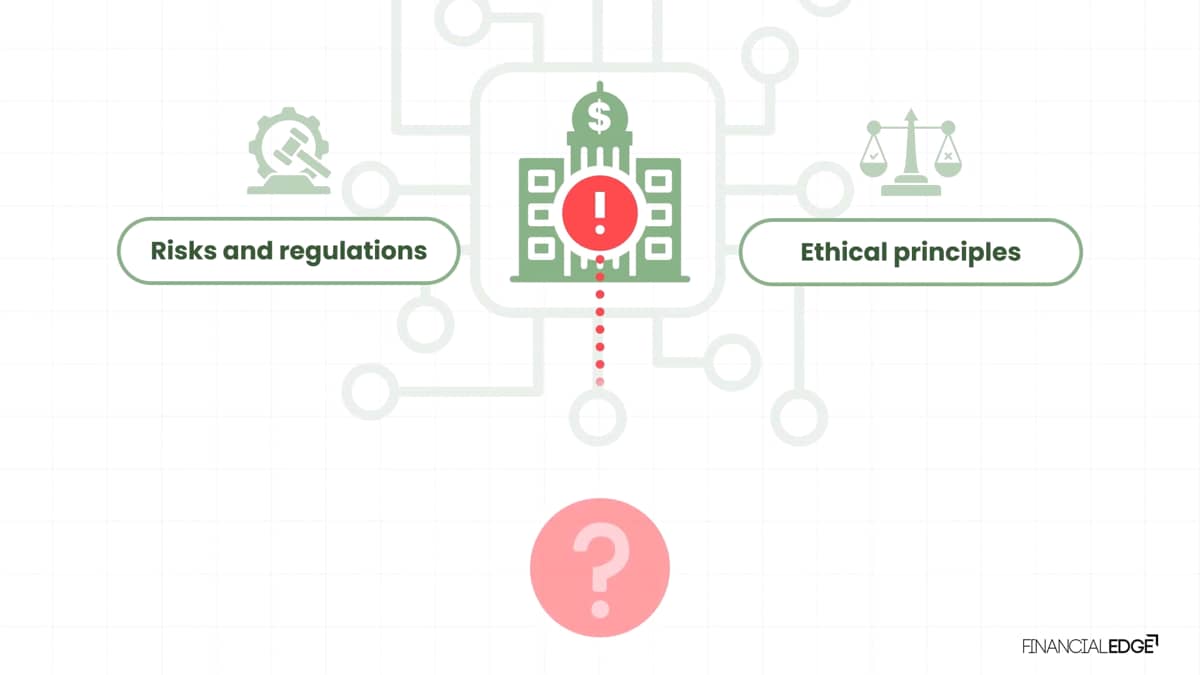
There are significant risks, regulations, and ethical principles that financial services firms must consider in relation to ai.
But crucial to this consideration is how financial services firms deal with issues around implementation.
How do we ensure that the AI systems we deploy are responsible, fair, and resilient? It starts with intentional design.
Ethical AI begins in the planning stage.
Stakeholder involvement is essential.
Input from compliance, risk, legal, it, and customer advocacy teams help to identify and react to ethical blind spots.
Early institutions should adopt clear ethical guidelines like Singapore's Fit Principles or internal AI use policies to align AI development with values such as furnace.
Transparency and accountability.
Impact assessments must be performed before deployment.
This include furnace audits, bias testing and harm analysis to evaluate how AI might affect customers, markets and employees.
The World Economic Forum notes that as of 20 25, 80 4% of financial firms were building internal governance frameworks to guide how AI is trained, deployed, and monitored, assigned that the industry is taking this responsibility seriously.

 Building Ethical AI Systems in Financial Services Summary