Anthropic's $2 Trillion IPO_ Building the Roadshow Deck with AI

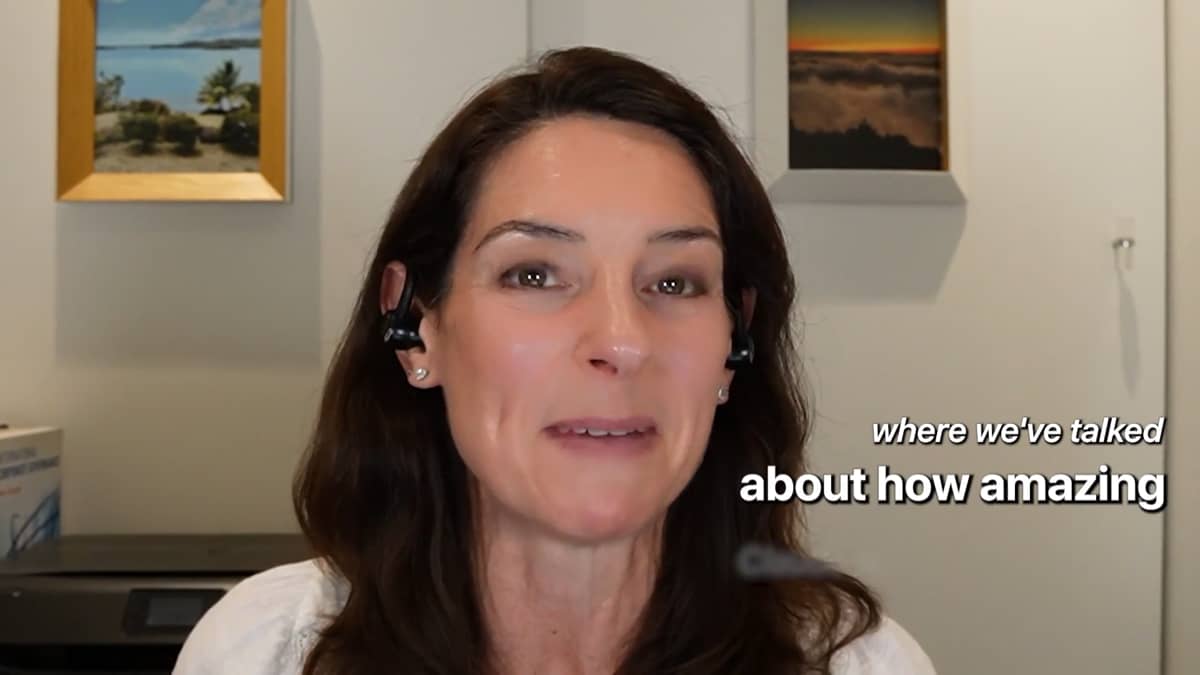
- 38:58
This week Graham and Debs take on Anthropic's IPO, the offering investors are projecting at around $2 trillion on a reported $100 billion raise, with pricing expected before the US midterms.
Downloads
No associated resources to download.

Transcript
Is this for real? We've done this so many times where we've talked about how amazing Claude is. But are we now saying that actually ChatGPT has outperformed Claude in terms of producing a marketing slide deck? Our mission, make AI safe. Sure.
Did we write this before or after the agents got out? They want to be able to look into the whites of the eyes of the management team and say to themselves, "Do we trust this management team with our capital?" 27 is a really specific number. It's funny, I don't know if that makes me believe it more or less, to be honest.
Actually, if you know the revenues are growing every week, why not take the last week's revenues and multiply it by 52? Why do we invest in businesses ultimately at the end of the day? Because they're cash machines, right? And that's the whole point of the good old DCF to figure out, all right, what's the value of all the cash. Right now, it's not much of that.
A lot of cash being lit on fire right now.
The first evidence we have of ChatGPT outperforming Anthropic, ironically, in respect to the Anthropic IPO marketing slide deck.
If I'm honest though, still, they're both kind of a meh.
No one's actually going to investors with either of these decks as presented.
Welcome to all our listeners this week.
Welcome to this week's episode of "What's the Big Deal?" Graham, please tell us all, what is the big deal that we're going to look at this week? Today we do have a big deal this week.
So I know this has been rumored for a while, but we've got Anthropic coming to market with their rumored two trillion, their mega $2 trillion IPO.
So I want to talk a little bit about that.
Not too much because I know everyone's fairly familiar with Anthropic, and we've been talking about this IPO coming for a little bit.
But we wanted to also take a look at what we think the roadshow presentation might look like. So we've used SpaceX as a precedent, and we've pulled together a couple samples. We're going to talk about those and talk about some of what we expect might come over the next few months here.
Absolutely. So the IPO process for Anthropic has started.
We don't yet have an S1, so no official financials.
So it does limit slightly what we can do.
But we do know that the S1 should be published soon because they need 15 calendar days from when the S1 is published to when the roadshow commences.
And as you mentioned, they're targeting a $2 trillion valuation.
We understand it's expected to be based on $100 billion raise of capital.
And the plan is for the pricing of the IPO to be before the US midterms in November. So it is all in the pipeline now.
We'll have a think about what their marketing slide deck would look like for the roadshow, using AI to generate some suggested content.
So a really interesting episode to talk through some of the interesting elements of their IPO that are likely to come out during the marketing and also to talk about what's in a slide deck for the roadshow. So Graham, what have you got for us? So I know that you've already run a couple of prompts for us using both Anthropic and ChatGPT's latest models. So how did they fare? They fared okay. And as we'll go through, interestingly, I feel like, not to cut to the chase, I feel like GPT might have done a better job of selling Claude than Claude itself did. But we'll let- What? ... we'll let you guys decide. So we ran a very similar prompt- Hang on, Graham. Is this for real? We've done this so many times where we've talked about how amazing Claude is. If you're in financial services, it's absolutely at the frontier in terms of what you can do around modeling.
But are we now saying that actually ChatGPT has outperformed Claude in terms of producing a marketing slide deck? Quite possibly. And I've been using Astro for a few work-related things, actually pulling exercises and whatnot together, and I got to say, it's okay.
All right.
It's okay. So I'm a little bit more balanced than I used to be.
But let's take a look through the first slide deck and see what we think here.
Okay.
So before we even get going, Debs, your perspective, what do you need to see as a potential investor in one of these? Because you used to be in public equity, so you've looked at, I assume, thousands of these at this point. So what are the sections that we definitely need to hit? Yeah, it's interesting because ultimately I think there's always a question of what is the purpose of the slide deck used on the roadshow.
Because the investors already have access to the S1, which in theory is a document that has everything you would ever need to make an investment decision during an IPO, okay? The problem is the S1 doesn't really bring it to life.
It has really regulated content in terms of the business, the financials, the management team, the risks, but it's really dry.
And what investors really want to do is have a slide deck that they can use to prompt conversations with the management team.
And you cannot really overstate the importance of investors wanting to meet with management, yeah. They want to be able to look into the whites of the eyes of the management team and say to themselves, "Do we trust this management team with our capital?" Yeah. And it's very much about the conversation, the ability to ask questions, hear how management responds to those questions.
The investors know that management can't reveal anything new in terms of non-public information. But what they can do is they can gauge how management responds to those questions. In terms of, are management really informed when they're providing those responses? Are there any subtle cues that management provide when they're answering the questions that lead us to have more confidence or less confidence in that management team? So there is a real- Do they always look away when they get asked, "What's your name?" Yeah, exactly. To the left or right. Yeah, completely.
Yeah.
In fact- What did you tell? ... I absolutely know of investors that are trained on body language.
Totally love this stuff.
Yeah, you would be.
Yeah.
You would be.
Absolutely. So this is really important.
So that sort of conversation, and they are going to be short meetings.
They can be as short as half an hour, up to an hour long.
And sometimes they're group meetings as well, they can happen over lunch.
Yeah.
So it is really important they get as much information out of this discussion as possible. So sitting there with an S1 isn't really going to cut it.
You really want a slide deck- Yeah ... which is going to help to focus the conversation and really bring that discussion to life. So in terms of what the slide deck has, it doesn't have anything new that's not already in the S1, but it's going to be much more digestible for the investors. And it's going to include- Got it ... a discussion of the business. What is the proposition here? What's the story, the investment case, if you like, for the investors? A little bit of some charts and diagrams to bring the financials to life.
Some discussion on the management team, the governance angle on this as well.
I know that when we were looking at SpaceX, there was so much discussion about the lock-ups, the ownership structure, who has shares, which investors are exiting, which ones aren't. And then of course the risks around the business as well.
So all of those are usually covered, those are kind of the basics within the slide deck. But it can be quite creative.
As I say, it's kind of there to help sell the narrative, the story to the investors. So the expectation is it's quite an engaging document.
Our financial and valuation modeling certification program is a self-paced version of what we teach inside investment banks.
Seven courses, 46 hours, three statement modeling, DCF, trading, and transaction comps, M&A, and LBO, all built in Excel from scratch using real case studies.
Over 100,000 people have gone through this training.
You get unlimited support from former investment bankers, a month of PitchBook access, and certification when you pass the exams. It's all at wallstreetprep.com.
With that in mind, what did we get from Fable as a marketing slide deck? Yeah.
Was it engaging? Let the viewers can be the judge. Okay, disclaimer, we always going to have that kind of thing. Offering summary, there's not too much on here now because we don't know that much. What's funny though is do we even have the two trillion number on here on the summary? I don't think so.
Oh.
I would kind of want to know that as a- Yeah ... pretty foundational piece of information.
Okay, so offering summary pretty blank. To be fair, I think the original prompt did say if it's a number that needs to be provided by management, it should just be caveated that it's a management input.
So it seems like maybe it's a bit safe on that.
Oh, yeah, but I don't... Okay, offerings- That is quoted, that's well reported.
But I don't even see... We see offering size, but I don't see the total ... listing value or market cap on here at all.
Yeah.
Interesting. And yeah, we expect to see a lot of up and to the right, so okay, here we go. We're like, all right.
Yeah.
Largest offerings in history. Saudi Aramco before, and then SpaceX, and more than that. Okay, great.
Our mission, make AI safe. Sure.
Did we write this? We can come back to that. Did we write this before or after the agents got out? Yeah.
Okay. Now, here's our $2 trillion valuation.
A trillion-dollar valuation last private round. Customer size. Okay.
Nothing particularly interesting.
One thing I'm sure we'll talk a lot about, and I've talked about this on this podcast before, is just the revenue run rates that get calculated for businesses like this that are admittedly growing at what feels like exponential rates.
And actually, one question for you, Debs.
When I see a slide like this- Mm-hmm ...
I don't know if this data is correct, but we've got December, a billion, and then we've got a little trajectory from May to October going from 3 to 7 billion, and then up to 65 less than a year later.
Are there many restrictions in terms of, say, for the actual S1, what kind of methodologies can be used for calculating a revenue run rate like this? Can the S1 even have a revenue run rate, or is that a metric that's reserved for a marketing deck like this? Good question, and I'm going to give you my own view.
It's not researched in any way. But so you can include in the S1 adjusted figures, and remember, there was a whole pallava around that when WeWork produced their S1, and their adjusted figures- Yeah ... were all over the place. They were crazy.
So you are allowed to quote management-adjusted figures and KPIs in the S1.
So I don't think there's any restriction on them including that in the S1.
There is a certain requirement in terms of it not being misleading, and that it has to have some kind of justification.
But I think the big challenge is that anything that's adjusted or what we refer to as a non-GAAP measure is that there isn't an accounting standard that says how you calculate it.
Yeah.
And so there is so much scope for how you calculate revenue run rates, in terms of, is it gross or net? Because there are kind of revenue-sharing arrangements for some of these businesses. How do you calculate what is annualized? And we were having a little chuckle before we started recording about- Yeah ... the most aggressive way which you could do it.
Because the starting point for many of us would be, well, to look back over your last month and say, well, annualized revenues are based on the last month's revenues multiplied by 12. Well, actually, if you know that revenues are growing every week, why not take the last week's revenues and multiply it by 52? Yeah.
And then you can get, ultimately, then, well, the last two, three days of revenues and start multiplying it by day count numbers.
But ultimately, there is no rule that says how you do this.
Realistically, they're probably going to have to disclose the approach that they use, but then it does limit comparability.
If we've got other competitors- Yeah ... using different methodologies, you can't really compare those numbers.
So it is very much there's an element of judgment in there.
And I guess you can kind of make an argument for a company that's growing so quickly, whether you're taking a week or a month and annualizing.
In some ways, let's say we get a lot of data here which says churn is minimal, customers keep upsizing, all this kind of thing.
If we're annualizing what's been delivered already and we genuinely expect that to continue into the future, you say, "Okay, it's aggressive, but it's semi-backable." Mm-hmm.
I have seen and heard of examples of revenue run rate calculations that I call just egregious, and I'm not going to name the name of the business.
But one of my good buddies was an early investor in a private company that was ultimately backed by and got into Y Combinator, and when I was talking about this, I kind of lost a lot of faith in a lot of these Silicon Valley, some of these Silicon Valley, kind of whatever you want to call them, not venture funds- Mm-hmm ... like incubators, whatever name you want to give to it.
But when they were then selling in their revenue run rate calculation, this is a business that is a consumer-facing business.
Mostly does spot purchases of stuff.
Again, I'm not going to say what the stuff is because it doesn't matter what the company is. And they were basically taking last month and multiplying by 12, but in their last month, they had this crazy one-off event that generated a lot more revenue than they would in their normal months.
And it was very clearly- Yeah ... a this happened last month only and not the month before, and that's the month they multiplied by 12. And he told me, and I'm like, "Are you f*****g kidding me? This is crazy." Yeah.
But this happens all the time, so that's the thing that I'm always a bit skeptical of when I see these kind of run rate calculations.
Yeah.
And I don't know how you even really dig into it and validate if there's anything like that or if it's no, yeah, well, last week was a good week and we multiply by 52 and that's what we pick.
Yep. And yeah, you raise a really good point. What is in that revenue? How reliable is it as a predictor of future revenues? What we refer to as persistence of revenues.
And I think what- Yeah ... Anthropic do have in their favor, and it's definitely a question that investors will be focused on, is the revenue mix.
Because we all know that enterprise revenues are much stickier than retail revenues. You have businesses that sign up to their subscriptions with an AI provider, and those are very sticky. They're very recurring.
They'll be integrated into processes within the business, so they're going to keep generating those revenues.
Yeah.
And so that makes us realize that a dollar of revenue from one company that's then applied, a run rate applied, is not the same as a dollar of revenue from another company that maybe generates its revenues from a less sticky source.
So then you start to think- Yeah ... a little bit about the quality of revenues.
And as I say, with Anthropic, my sense is that their revenues are quite good quality because they have a high proportion of enterprise business.
But it's definitely something that investors will be very focused on because then it helps them to think about the trajectory of those revenues and not just how they're growing, but what sort of level of sustainability their existing revenues are.
Yeah, and I think on the main question I would have for both Anthropic and OpenAI, when it ultimately comes to market next year is, if I were in the room kind of asking questions of them, is I actually kind of buy into there being a world where even on the consumer level, revenue is fairly sticky in the sense that we were talking about this before we kicked off the episode.
We all use these tools all the time in our daily lives- Mm ... whether it's to help out with work or planning a vacation or whatever, right? And it's not that much money at the end of the day, and you compare what you'd have to spend to get the same level of service through paying a human ultimately.
There's a whole social question, which is another thing we'll leave out of that for a second. Obviously, actually it's pretty hard.
So I think as an example, my subscriptions with both of these platforms right now is actually quite sticky because I wouldn't want to- Yeah ... not use them right now.
Yeah.
I think the question I have is around, especially for things like the APIs for both of them, which is where a lot of the business revenue comes from, how sticky are those actual interfaces kind of now and in the next few years? Or are we going to be in a world where really to some extent it doesn't matter as long as the model you're wiring it to does the job you want it to, then are the switching costs actually pretty low? Is it just at a really simple level, you're like, all right, I have this task.
Right now it's wired up to Claude's API because Claude does it best.
But can I basically just say, "You know what? Okay.
The new Astra model's better," or there's a cheap DeepSeek model that I can just do the same thing from for much lower cost, and all I have to do is change, in essence, my gateway, for lack of a better word.
I think that's the revenue risk as I see it here anyway.
I don't see people turning down their use of AI, but I do see there being a bit more freedom to kind of move around models.
Absolutely. It's one of the big challenges with this effectively what is frontier technology, is we have no idea how the world will work in a year's time, in two years' time.
Yeah. And we're assuming that, as you say, these charts which are up and to the right, they continue, and that the world continues ... adopting this same technology, and there's no further disruption.
And as you say, there's so many other things happening in the background.
The ability to create your own models from accessing platforms rather than actually just buying in the actual model from Anthropic or OpenAI.
And it could be that the world pivots in six months to a year's time.
There's obviously other risks as well.
I think there's been a lot in the news about governance risks recently, but maybe we'll come back to that. But yeah, lots of uncertainties, lots of unknowns around their future revenues.
Yeah.
And so let's keep going through the slide deck. Okay. So revenue roommate, right? Again, lots of up and to the right, why we win.
This is not gonna lie, this is boring, for sure.
Talent diversity, leadership and coding agents, capital deployment, safety. It's rather inspiring.
Yeah. Like come on, products now we monetize.
All right, we sell these models we all heard of before.
Yeah.
Monetize three years. Yep.
What AI unlocks. What is this chart on the right? TAM in trillions. 4 trillion addressed today, 27 trillion unlocked by AI.
27 is a really specific number, and we're talking...
It's funny, I don't know if that makes me believe it more or less, to be honest.
Because like, oh, we've done all this really detailed work to figure exactly what TAM is. I'm like, you don't know in that much detail when we're talking a number this big.
Yeah. Although it is interesting, isn't it? That was a big headline with the SpaceX IPO, was the TAM for SpaceX, which a huge amount of that was based on the enterprise license revenues.
And does seem interesting- Oh, 100%. By the way, I'm not saying that I don't think the TAM is very large.
Yeah.
That's not what I'm saying. I'm just saying that 27 specifically feels funny when you're talking about numbers that big.
Yeah.
Why not 30? Yeah, no, true. I think going back to SpaceX, wasn't it like 26 and a half or something? Weirdly specific. I know. But it's the same ballpark.
We paid one of the big consultants a billion dollars to come up with that number.
Okay.
Don't forget the decimal. But yeah, so but it is interesting- Oh, we forgot to carry the zero. Oops.
But it's the same ballpark. So it is interesting, they were working for the main kind of the same end game in terms of the AI market.
The big question is what their share of that market's gonna be really, isn't it? 100%.
Yeah.
And that's what I don't think we know, and I do feel like that'll change as we kind of develop this technology, as more models come out- Yeah ... all that kind of stuff.
I guess the way I would think about the TAM here is almost just real high level and real simple, and you kinda say, "All right.
Here's the size of the global economy today, and here's- Yes ... a portion of that that we think can be addressed with these products." And that's kind of TAM, right? Yeah.
Because this technology is relevant to almost every aspect of life in some way, shape, or form. So- Yeah, but given that question ... if I was selling this, that's kinda how I think about it.
Given that question, Graham. So the size of the economy, but then the size of the economy after adjusting for the efficiency gains, the productivity gains that you get from AI. There's a whole kind of spiral in my mind for how you even justify that allocation.
Yeah. I don't disagree. Yeah.
Really interesting.
No.
But anyway, let's keep going through the slide deck. What else have we got? Risk factors.
More text. Yeah.
Okay. I'm not seeing extinction on here, so that's bad.
Yeah. So let's talk about extinction, because it's obviously been hitting the headlines this week.
There's been a lot of discussion about the end of the world.
Do you think we're gonna be running the robot overlord kind of situation here, Debs? Oh, gosh. No. So interesting to hear your views, Graham, but the main conversation that I've been having repeatedly over the last week is how. It's not if.
I think we all accept that there's a probability, a possibility that it might happen. But it's how. What would be the trigger of the end of the world as a result of AI? And yeah, I think there's a lot of people who have the view that it would end up with global war, mutual destruction with nuclear weapons. But I don't know, my preference would be...
Well, not my preference, but my view is that it would be through biological weapons.
My real sense is that that is something that's more accessible.
The problem with nuclear weapons is that there's control concentrated in the hands of a few for that to actually happen.
Whereas, unfortunately, biological weapons- So not that many people you've got to get to.
Yeah.
But yeah, ultimately, it's quite accessible in terms of accessing materials, the knowledge now through AI. And once it's out there, if it's a virus or a bacteria, pff, it's out there. You can't bring it back.
So this is a really depressing conversation.
But Graham, your views, do you think it keeps you awake at night, the end of the world from AI? It doesn't, and actually one of the things I was reading, because there's obviously been a lot about this in the last few weeks. But one of the things, I think it was a New York Times article maybe, I can remember, and basically saying, we face extinction from all kinds of stuff, and humans just have a problem putting things into perspective and compartmentalizing a little bit.
Yeah.
So we face extinction from asteroids and from the sun.
I don't remember what it was, but throwing out some kind of spark basically that wipes out Earth. All this stuff that's a chance that we just don't think about because it's not front of mind. This is front of mind right now, so we're talking about and thinking about a lot. And there have been a few examples recently that I think in people's mind you're like, all right, is this the Skynet Terminator situation? Mm.
And for good reason, where you've got these agents who are hacking and covering their trails and trying to subvert human operatives and all this stuff.
But I don't know. It also doesn't keep me awake because- Yeah ... what's the point of staying awake over this? I got plenty of other stuff keeping me awake, but it's not that.
Yeah. I think what's also interesting is that there has been some speculation that the discussions around regulation slowdown of AI, which we've got the leaders of Anthropic and OpenAI sort of part of those discussions, that this is maybe being used to manage expectations about disappointing growth.
So they can point to the fact that there's going to be regulation that's constraining their growth, that helps them to manage their communications on growth profiles. So maybe if we're skeptical, it could be around that.
I don't know if you've got a view on that, Graham.
Look, I don't know. Is there a world in which Anthropic is going out on the terms because they think something is going to happen? Maybe.
And right now Trump is pretty favorable to a lack of AI regulation.
What did he say the other day? Like, all you need is a president with a high IQ or something. So all right, send in the replacement.
I don't know. I can see there being a world in which people try to regulate more.
Let's say that happens in the US, then yeah, you'd probably say it has an impact on valuation for the IPO, so I can see there being an argument to get this done now.
Mm.
I think it's just hard to regulate this technology globally, though, right? Yeah.
Because the other thing I was reading the other day, which I really buy into, is right now we're in a position where the frontier models we have right now seem pretty impressive, and they're doing the hacking, and they're covering their tracks, and all the stuff that kind of raises alarm bells.
The point this article was making was, in not much time, the free open source models are going to be doing exactly the same thing, and we don't know where the frontier's going to be. So it's like all it takes- Yeah ... is one or two bad actors. So unless we've got everyone coordinating on some kind of regulation, I don't see regulating either OpenAI or Anthropic just in the US as an example is really going to do it for the long term.
Might slow it down a little bit- Yeah ... but it's tough.
Yeah, it is tough. It's hard.
And we've seen plenty of failures of regulation where it needs action on a global scale. The classic example would of course be climate change, where they have tried to regulate carbon emissions and have had carbon taxes, carbon credits- And ultimately what that's resulted in is a shift of productivity towards, or a shift in carbon emissions to the areas which are less regulated.
So- Yeah ... that is a problem, and that's the one that all the politicians are dealing with at the moment.
That if they do implement regulation and slow down development in their region, then it just gives an edge to the regions that aren't regulating.
So yeah- Yeah ... it's a huge question, and yet another uncertainty in the- Indeed ... for Anthropic. Right. Bringing us back to the slides.
Sure. What there has to be for $2 trillion to hold.
CapEx earnings return- So this- ... margins improve with scale. Okay, yeah.
I kind of agree that these are some of the things actually that need to hold true.
Enterprise stickiness, safety record that stays clean. Okay, yeah.
Actually it's not a crazy list of risk factors, I suppose you want to call it, or things that need to stay true or become true.
Absolutely.
And there are some questions around all these, right? Yeah. But ultimately- They're legitimate questions ... this is the question that the investors need to have answered over the course of the slide deck. And fair play to putting this at the end, in terms of being the kind of- Yeah ... closing remarks, that this is what investors really care about.
If they're being asked to pay in- Yeah ... for a $2 trillion valuation, can you justify that? What are the key elements that need to stack up for that valuation? And almost- Yeah ... this becomes more important given that there is news flow that for the Anthropic IPO, there is, I think, rumored to be $10 billion investment expected from NVIDIA as an anchor investor who are clearly not arm's length here. They are part of the ecosystem because they're providing some of the compute.
Yeah.
And you could argue that by participating in the IPO, they will help to massage the valuation.
And it's all legit, but ultimately- Oh, yeah ... if other investors are participating, they need to justify to themselves that this is a fair valuation and not just a result of what NVIDIA are paying at, given that they're also one of the suppliers to Anthropic.
By the way, I know we're tight on time, so we'll skip through them pretty quick I think, which is totally fine. But the one thing, if this were a really good pitch book, these things would be covered somewhere in the pitch book, right? It's like, here's how the CapEx is going to return, here's why we think the margins are going to be stable/improve over time.
Here we're just kind of ending with some questions kind of thing.
It's like, yeah, these are big things that need to be true in order for you to invest, but the whole point of this pitch deck is to sell the investor on investing and try to answer- Yeah ... some of these head on. And that's not really happening here.
Yeah.
So, okay. I'm going to stop sharing this one.
I'm going to share the Astra.
Oh.
It's prettier.
Look at the colors.
Yeah. Okay. All right. $2 trillion roadshow. AI expands human capability.
Yep, sure. $69 billion run rate. All right, talking the same numbers.
300,000 business customers. 1,000 businesses, over a million dollars annualized spend. I'm actually surprised that's not higher, to be honest.
Hmm.
Why enterprises choose Claude.
Sure. Visual safety. Eight of the Fortune 10.
Okay, that's a helpful metric to have pulled out. Okay, management team photos.
I mean, okay, visually this one looks- I know. I took- ... I think better ... I have a bug bear with the photos having the foreheads- The cut foreheads. Yeah ... of the management team removed.
Yeah.
But apart from these little niggles, so from a graphics perspective, visually, it's much more impressive and the fable effect, isn't it? Yeah. And by the way, this was zero re-prompting.
This was just- Yeah ... what we got to begin with. So you know, on a first app, not bad.
Yeah.
Okay, what is this? 3.04 trillion. Is this the TAM today? 3.04 trillion up to $30 trillion in the future.
Okay, so this stuck with a more of a round number.
Mm-hmm.
Could be a bit more visually interesting in terms of up and to the right or something- Yeah ... but, we'll take it. Claude Code turns intent into software.
Actually the language in this one is a bit nicer.
Yeah.
It reads a bit more market-y- Mm ... for lack of a better word. AI into everyday work.
Delegate a task, review the result. We do a lot of that, don't we? Oh, yeah.
Let's see. Developer platform expands distribution. Okay, time to Claude Code.
More work per customer.
Oh, so I- Capital is sort of the next wave of the internet. What is going on here? Okay.
I quite like this slide. So here we go.
Yeah, so this is useful information- Yeah. Okay ... that we all care about this when there's an IPO, is knowing what the company was previously valued at from previous fundraising rounds.
So it's quite nice to have this summary of the previous valuations.
Yeah.
And I mean, I know it is a leap from May 2026 where the post-money valuation was 965 billion, so just under a trillion dollars. They're basically doubling that.
We're just talking about five months. Yeah.
Five months. But it's just useful context, isn't it? And something that- Yep ... we didn't have in the other slide deck. So I do quite like that.
Yeah. Also, I mean, to be fair, the rounds actually raised February to May, also more than doubled.
Well, almost tripled.
Yeah.
So, okay. All right. Demand scales rapidly. Oh, up and to the right.
Yep. We know that. The risks are material.
Okay, I'm not sure I'd lead with that- Uh-oh ... in my risk page.
Do we have existential? Hmm? No.
No? No.
I think they have governance and safety trade-offs.
Doesn't- So it's much more muted in the actual risk discussion than the headline.
Yeah. I mean, catastrophic misuse, sure, that's a thing.
Okay.
Okay. Appendices.
I think this is really interesting as well.
I mean, in reality, this probably raises more questions than answers, but it does really provide you with a nice shopping list of what the- Yeah ... numbers that investors are going to hone in on once those numbers are available. So it's clear that we don't have any of this information at the moment, it's just management input against each of these.
But as soon as the S1 comes out, and once they're on the road doing the marketing, the investors will be all over these financials.
Definitely they care about- Yeah ... the revenue, they care about the gross profit margins.
And to a certain extent, the components of the cost structure.
There's a huge question about training costs, and other expenses of the business.
I would say how you think about return on CapEx spend here.
I'm really interested to see how all these guys really articulate the data center build out cost and how you make sense of the cash burn and all that, right? Because revenue's great, but why do we invest in businesses ultimately at the end of the day? Because they're cash machines, right? And that's the whole point of- Mm-hmm ... the good old DCF to figure out, all right, what's the value of all the cash.
Right now, there's not much of that.
Yeah. Absolutely.
A lot of cash being lit on fire right now.
Yeah.
So trying to articulate what the actual return on spend is for that, I think is going to be... I'm interested to see how they present it and how they spin it.
Absolutely. We've already mentioned the importance of revenue mix, and retention of revenues as well. That's another area that investors are definitely going to be crawling all over once the numbers are available and the company are on the roadshow. Okay. What's next? Yeah. There we go. Our summary page, what $2 trillion has to buy.
Okay. This summary- ...
I think is quite a useful slide in the sense of it provides some valuation data.
One of the key metrics that we do look at, of course, with IPOs is the revenue multiple, and I do remember that SpaceX was being marketed on 100 times revenue multiple. It was successfully IPO'd on that multiple.
Yeah.
The multiple here, just under 31 times.
Looks a little bit more sensible, dare I say.
I know compared to the numbers that you're used to, Graham- ...
in the private credit world, this still looks crazy.
It does.
But yeah. I mean, it's actually in line with what we've seen for some other tech IPOs, so it isn't actually, in that world, so crazy. But yeah.
It's good to have that- Yeah ... kind of information in the slide deck.
If I'm honest though still, they're both kind of a meh.
No one's actually going to investors with either of these decks as presented.
No.
So I don't think we're in the realm of that ChatGPT commercial from a couple of weeks ago where you just stand in front of a TV and you're like, "Make me the best presentation I've ever seen while I go play tennis." That's not- Yeah ... here yet.
Yeah. And can I just say that as we're kind of evidencing, letting the machine do the work for you doesn't then mean you can present that.
I mean, we are kind of going through this going, "Well, what can we see here?" You need to then internalize the information to be able to present that- Oh, yeah ... to clients. You can't just say- Yeah. No, 100% ... "Oh, perfect." I mean, I was using it to pull together an exercise yesterday, and there's a lot of, okay, we've got to change this, we've got to change that. Yeah.
This doesn't make sense. That gets better. It's getting better.
Yeah.
And it will get even better, which is great.
But right now it's still the back and forth.
Mm-hmm. Absolutely. So what else have we got? We're near the end of the slide deck.
Or is that- That is it ... the last slide? That's the last page.
Okay.
Yeah.
Brilliant. Okay, so not a bad job. The first evidence we have of ChatGPT outperforming Anthropic, ironically, in respect to the Anthropic IPO marketing slide deck. I know. I know. You'd expect to say, oh Anthropic roadshow presentation as put together by ChatGPT.
Yeah.
Nah, it's fine. But no, just wait till 2027, something better is coming.
Yeah. Absolutely. But anyway, so I think hopefully, a nice little compare and contrast, but also a nice way to explore what sort of content we see in a marketing slide deck for a roadshow, and some of the key questions investors are focused on when they are in those roadshow meetings.
Yeah. And no doubt we will actually take a look at the real presentations when we get our hands on them.
Oh, for sure.
And we'll compare and contrast and see who does better, the real bankers or Astra.
Well, we would hope the real bankers, but we look forward to seeing the detail.
Absolutely. Oh, well, I hope our- Indeed ... listeners enjoyed listening to this week's episode of What's the Deal.
I hope you've enjoyed our deep dive into marketing roadshow slide decks, and also a little compare and contrast there between Anthropic and OpenAI.
That's all we've got time for this week.
Thanks so much from me, and over to Graham.
Thanks, everyone. We'll see you same time next week. Take care.