Johnson & Johnson
NYSE: JNJ
Share price (04/02/26): $0.24
Industry: Pharmaceutical Preparations
Financials
|
Type
|
Title
|
Date
|
Extracts
|
|||
|---|---|---|---|---|---|---|
| 10-K | 02/11/26 | PR | IS | BS | CFS | |
| 10-Q | 10/22/25 | PR | IS | BS | CFS | |
| 10-Q | 07/24/25 | PR | IS | BS | CFS | |
| 10-Q | 04/23/25 | PR | IS | BS | CFS | |
| 10-K | 02/13/25 | PR | IS | BS | CFS | |
| 10-Q | 10/23/24 | PR | IS | BS | CFS | |
| 10-Q | 07/25/24 | PR | IS | BS | CFS | |
| 10-Q | 05/01/24 | PR | IS | BS | CFS | |
| 10-K | 02/16/24 | PR | IS | BS | CFS | |
| 10-Q | 10/27/23 | PR | IS | BS | CFS | |
|
|
||||||
Transcripts and slides
|
Title
|
Links
|
Date
|
|
|---|---|---|---|
| Presents at Barclays 28th Annual Global Healthcare Conference, Mar-10-2026 11:30 AM | Transcript | 03/10/26 | |
| Presents at TD Cowen 46th Annual Health Care Conference, Mar-03-2026 11:10 AM | Transcript | 03/03/26 | |
| Earnings Call Q4 FY2025 | Transcript | Slides | 01/21/26 |
| Presents at 44th Annual J.P. Morgan Healthcare Conference, Jan-12-2026 08:15 AM | Transcript | 01/12/26 | |
| Presents at Citi Annual Global Healthcare Conference 2025, Dec-03-2025 11:15 AM | Transcript | 12/03/25 | |
| Presents at 7th Annual Wolfe Research Healthcare Conference, Nov-17-2025 10:40 AM | Transcript | 11/17/25 | |
| Presents at Guggenheim Securities 2nd Annual Healthcare Innovation Conference, Nov-11-2025 10:30 AM | Transcript | 11/11/25 | |
| Presents at UBS Global Healthcare Conference 2025, Nov-11-2025 11:00 AM | Transcript | 11/11/25 | |
| Earnings Call Q3 FY2025 | Transcript | Slides | 10/14/25 |
| Presents at Wells Fargo 20th Annual Healthcare Conference 2025, Sep-03-2025 11:50 AM | Transcript | 09/03/25 | |
|
|
|||
Ownership
|
Type
|
Title
|
Date
|
|---|---|---|
| SCHEDULE 13G/A | 03/26/26 | |
| 13F-HR/A | 03/18/26 | |
| 13F-HR/A | 03/18/26 | |
| 4 | 03/12/26 | |
| 4 | 03/12/26 | |
| 4 | 03/12/26 | |
| 4 | 03/03/26 | |
| 144 | 02/27/26 | |
| 4 | 02/23/26 | |
| 144 | 02/20/26 | |
|
|
Other
|
Type
|
Title
|
Date
|
|---|---|---|
| ARS | 03/11/26 | |
| SD | 05/28/25 | |
| UPLOAD | 05/02/25 | |
| CORRESP | 04/23/25 | |
| UPLOAD | 04/16/25 | |
| ARS | 03/12/25 | |
| CERT | 02/28/25 | |
| SD | 05/28/24 | |
| CERT | 05/21/24 | |
| ARS | 03/13/24 | |
|
|
News
|
Type
|
Title
|
Date
|
|---|---|---|
| 8-K | 01/21/26 | |
| 8-K | 10/14/25 | |
| 8-K | 09/09/25 | |
| 8-K | 07/16/25 | |
| 8-K | 06/10/25 | |
| 8-K | 04/30/25 | |
| 8-K | 04/15/25 | |
| 8-K | 04/03/25 | |
| 8-K | 02/26/25 | |
| 8-K | 02/20/25 | |
|
|
Prospectuses and Registrations
|
Type
|
Title
|
Date
|
|---|---|---|
| S-3ASR | 02/11/26 | |
| 8-A12B | 02/26/25 | |
| 424B2 | 02/21/25 | |
| 424B5 | 02/19/25 | |
| FWP | 02/19/25 | |
| 424B2 | 02/19/25 | |
| 424B5 | 02/18/25 | |
| FWP | 02/18/25 | |
| 25-NSE | 11/06/24 | |
| 8-A12B | 05/20/24 | |
|
|
Proxies
|
Type
|
Title
|
Date
|
|---|---|---|
| DEF 14A | 03/11/26 | |
| DEFA14A | 03/11/26 | |
| N-PX | 08/26/25 | |
| PX14A6G | 04/23/25 | |
| PX14A6G | 03/20/25 | |
| DEF 14A | 03/12/25 | |
| DEFA14A | 03/12/25 | |
| DFAN14A | 03/07/25 | |
| DFAN14A | 02/25/25 | |
| DFAN14A | 01/22/25 | |
|
|
Non-Ownership
|
Type
|
Title
|
Filed
|
|---|---|---|
| DEF 14A | 03/11/26 | |
| DEFA14A | 03/11/26 | |
| ARS | 03/11/26 | |
| S-3ASR | 02/11/26 | |
| 10-K | 02/11/26 | |
| 8-K | 01/21/26 | |
| 10-Q | 10/22/25 | |
| 8-K | 10/14/25 | |
| 8-K | 09/09/25 | |
| N-PX | 08/26/25 | |
| 10-Q | 07/24/25 | |
| 8-K | 07/16/25 | |
| 8-K | 06/10/25 | |
| SD | 05/28/25 | |
| UPLOAD | 05/02/25 | |
| 8-K | 04/30/25 | |
| PX14A6G | 04/23/25 | |
| 10-Q | 04/23/25 | |
| CORRESP | 04/23/25 | |
| UPLOAD | 04/16/25 | |
|
|
Ownership
|
Type
|
Title
|
Filed
|
|---|---|---|
| SCHEDULE 13G/A | 03/26/26 | |
| 13F-HR/A | 03/18/26 | |
| 13F-HR/A | 03/18/26 | |
| 4 | 03/12/26 | |
| 4 | 03/12/26 | |
| 4 | 03/12/26 | |
| 4 | 03/03/26 | |
| 144 | 02/27/26 | |
| 4 | 02/23/26 | |
| 144 | 02/20/26 | |
| 144 | 02/18/26 | |
| 4 | 02/18/26 | |
| 4 | 02/18/26 | |
| 4 | 02/18/26 | |
| 4 | 02/18/26 | |
| 4 | 02/18/26 | |
| 4 | 02/18/26 | |
| 4 | 02/18/26 | |
| 4 | 02/18/26 | |
| 4 | 02/18/26 | |
|
|
|
Title
|
Links
|
Date
|
|
|---|---|---|---|
| Presents at Barclays 28th Annual Global Healthcare Conference, Mar-10-2026 11:30 AM | Transcript | 03/10/26 | |
| Presents at TD Cowen 46th Annual Health Care Conference, Mar-03-2026 11:10 AM | Transcript | 03/03/26 | |
| Earnings Call Q4 FY2025 | Transcript | Slides | 01/21/26 |
| Presents at 44th Annual J.P. Morgan Healthcare Conference, Jan-12-2026 08:15 AM | Transcript | 01/12/26 | |
| Presents at Citi Annual Global Healthcare Conference 2025, Dec-03-2025 11:15 AM | Transcript | 12/03/25 | |
| Presents at 7th Annual Wolfe Research Healthcare Conference, Nov-17-2025 10:40 AM | Transcript | 11/17/25 | |
| Presents at Guggenheim Securities 2nd Annual Healthcare Innovation Conference, Nov-11-2025 10:30 AM | Transcript | 11/11/25 | |
| Presents at UBS Global Healthcare Conference 2025, Nov-11-2025 11:00 AM | Transcript | 11/11/25 | |
| Earnings Call Q3 FY2025 | Transcript | Slides | 10/14/25 |
| Presents at Wells Fargo 20th Annual Healthcare Conference 2025, Sep-03-2025 11:50 AM | Transcript | 09/03/25 | |
|
|
|||
Business
General
Johnson & Johnson and its subsidiaries (the Company) have approximately 138,200 employees worldwide engaged in the research and development, manufacture and sale of a broad range of products in the healthcare field. Johnson & Johnson is a holding company, with operating companies conducting business in virtually all countries of the world. The Company’s primary focus is products related to human health and well-being. Johnson & Johnson was incorporated in the State of New Jersey in 1887.
The Chief Operating Decision Maker (CODM) is the Company's Chief Executive Officer (Principal Executive Officer). The Executive Committee is Johnson & Johnson’s senior leadership team responsible for setting the strategy and priorities of the Company and driving accountability at all levels. Within the strategic parameters provided by the Executive Committee, senior management groups at U.S. and international operating companies are each responsible for their own strategic plans and the day-to-day operations of those companies.
Segments of business
The Company is organized into two business segments: Innovative Medicine and MedTech. Additional information required by this item is incorporated herein by reference to the narrative and tabular descriptions of segments and operating results under: Item 7. Management’s discussion and analysis of results of operations and financial condition of this Report; and Note 17 Segments of business and geographic areas of the notes to consolidated financial statements included in Item 8 of this Report.
Innovative Medicine
The Innovative Medicine segment is focused on the following therapeutic areas: Oncology (e.g., prostate cancer, hematologic malignancies, lung cancer and bladder cancer), Immunology (e.g., rheumatoid arthritis, psoriatic arthritis, inflammatory bowel disease and psoriasis), Neuroscience (e.g., mood disorders, neurodegenerative disorders and schizophrenia), Pulmonary Hypertension (e.g., Pulmonary Arterial Hypertension), Infectious Diseases (e.g., HIV/AIDS) and Cardiovascular and Metabolism (e.g., thrombosis, diabetes and macular degeneration). Medicines in this segment are distributed directly to retailers, wholesalers, distributors, hospitals and healthcare professionals for prescription use. Key products in the Innovative Medicine segment include: CARVYKTI (ciltacabtagene autoleucel), a chimeric antigen receptor (CAR)-T-cell therapy for the treatment of patients with relapsed/refractory multiple myeloma; DARZALEX (daratumumab), a treatment for multiple myeloma; DARZALEX FASPRO (daratumumab and hyaluronidase-fihj), a treatment for multiple myeloma and light chain (AL) Amyloidosis; ERLEADA (apalutamide), a next-generation androgen receptor inhibitor for the treatment of patients with prostate cancer; IMBRUVICA (ibrutinib), a treatment for certain B-cell malignancies, or blood cancers and chronic graft versus host disease; RYBREVANT (amivantamab), a fully-human bispecific antibody for adults with EGFR-mutated non-small cell lung cancer and LAZCLUZE (lazertinib), an oral, brain-penetrant EGFR tyrosine kinase inhibitor for non-small cell lung cancer; RYBREVANT FASPRO (amivantamab and hyaluronidase-lpuj), a subcutaneous therapy for patients with non-small cell lung cancer; TALVEY (talquetamab-tgvs) a bispecific antibody for adults with relapsed or refractory multiple myeloma who have received at least four prior lines of therapy; TECVAYLI (teclistamab-cqyv), a bispecific antibody for adults with relapsed or refractory multiple myeloma who have received at least four prior lines of therapy; ZYTIGA (abiraterone acetate), a treatment for patients with prostate cancer; REMICADE (infliximab), a treatment for a number of immune-mediated inflammatory diseases; SIMPONI (golimumab), a subcutaneous treatment for adults with moderate to severe rheumatoid arthritis, active psoriatic arthritis, active ankylosing spondylitis and moderately active to severely active ulcerative colitis; SIMPONI ARIA (golimumab), an intravenous treatment for adults with moderate to severe rheumatoid arthritis, active psoriatic arthritis and active ankylosing spondylitis and active polyarticular juvenile idiopathic arthritis (pJIA) in people 2 years of age and older; STELARA (ustekinumab), a treatment for adults and children with moderate to severe plaque psoriasis, for adults with active psoriatic arthritis, for adults with moderately to severely active Crohn's disease and treatment of moderately to severely active
ulcerative colitis; TREMFYA (guselkumab), a treatment for patients with moderate-to-severe plaque psoriasis, active psoriatic arthritis, moderate-to-severe Crohn’s disease and moderate-to-severe ulcerative colitis; CAPLYTA (lumateperone) is used in adults along with an antidepressant to treat major depressive disorder (MDD), depressive episodes associated with bipolar I or bipolar II disorder (bipolar depression) alone or with lithium or valproate; or to treat schizophrenia; CONCERTA (methylphenidate HCl) extended-release tablets CII, a treatment for attention deficit hyperactivity disorder; INVEGA SUSTENNA/XEPLION (paliperidone palmitate), for the treatment of schizophrenia and schizoaffective disorder in adults; INVEGA TRINZA/TREVICTA (paliperidone palmitate), for the treatment of schizophrenia in patients after they have been adequately treated with INVEGA SUSTENNA for at least four months; SPRAVATO (Esketamine), a nasal spray, used along with an oral antidepressant, to treat adults with treatment-resistant depression (TRD) and depressive symptoms in adults with major depressive disorder (MDD) with suicidal thoughts or actions; EDURANT (rilpivirine), PREZISTA (darunavir) and PREZCOBIX/REZOLSTA (darunavir/cobicistat), antiretroviral medicines for the treatment of human immunodeficiency virus (HIV) in combination with other antiretroviral products and SYMTUZA (darunavir/cobicistat/emtricitabine/tenofovir alafenamide), a once-daily single tablet regimen for the treatment of HIV; OPSUMIT (macitentan)/OPSYNVI (macitentan/tadalafil) as monotherapy or in combination, indicated for the long-term treatment of pulmonary arterial hypertension (PAH); UPTRAVI (selexipag), the only approved oral and intravenous, selective IP receptor agonist targeting a prostacyclin pathway in PAH; XARELTO (rivaroxaban), an oral anticoagulant for the prevention of deep vein thrombosis (DVT), which may lead to pulmonary embolism (PE) in patients undergoing hip or knee replacement surgery, to reduce the risk of stroke and systemic embolism in patients with nonvalvular atrial fibrillation, and for the treatment and reduction of risk of recurrence of DVT and PE to reduce the risk of major cardiovascular events in patients with coronary artery disease (CAD) and peripheral artery disease (PAD), for the treatment and secondary prevention of thromboembolism in pediatric patients, and for thromboprophylaxis in pediatric patients following the Fontan procedure. Many of these medicines were developed in collaboration with strategic partners or are licensed from other companies and maintain active lifecycle development programs.
MedTech
The MedTech segment develops and manufactures a broad portfolio of products used in cardiovascular, orthopaedics, surgery, and vision supporting physicians, hospitals, eye care professionals and healthcare systems across a wide range of acute and elective procedures. These products are designed to address disease states where procedural intervention plays a central role in treatment and patient outcomes. The Cardiovascular portfolio includes electrophysiology products used to diagnose and treat heart rhythm disorders, mechanical circulatory support technologies (Abiomed) used in patients with cardiogenic shock or those undergoing a high-risk percutaneous coronary intervention (PCI), circulatory restoration products (Shockwave) for the treatment of calcified coronary artery disease (CAD) and peripheral artery disease (PAD), and neurovascular care that treats stroke and other conditions. These offerings are primarily delivered through minimally invasive, catheter based approaches and are used by interventional cardiologists, electrophysiologists and neurointerventional specialists. The Orthopaedics portfolio includes products and enabling technologies that support joint reconstruction, trauma, spine, sports-related injuries, and others. The Surgery portfolio includes a range of surgical products and enabling technologies for use across open, laparoscopic and robotic surgical procedures. This portfolio includes instrumentation, energy devices, stapling systems, wound closure, biosurgery products, and digital and robotic technologies designed to support procedural consistency and efficiency across multiple surgical specialties. The Surgery portfolio also includes solutions that focus on breast aesthetics and reconstruction (Mentor). These products are used in hospitals and surgical centers worldwide and are supported by ongoing development of surgical techniques and clinical evidence. The Vision portfolio includes contact lenses marketed under the ACUVUE brand, TECNIS premium intraocular lenses for cataract surgery, and other products used in cataract and refractive procedures. Vision products are used by eye care professionals and ophthalmic surgeons and span both corrective and surgical vision care. These MedTech products are distributed to wholesalers, hospitals, and retailers and are used predominantly in the professional fields by physicians, nurses, hospitals, eye care professionals, and clinics.
In October 2025, the Company announced its intention to separate its Orthopaedics business. The Company intends to explore multiple paths to effect the planned separation with a targeted completion within 18 to 24 months after the initial announcement.
Geographic areas
The Company conducts business in virtually all countries of the world with the primary focus on products related to human health and well-being. The products made and sold in the international business include many of those described above under Segments of Business – Innovative Medicine and MedTech. However, the principal markets, products and methods of distribution in the international business vary with the country and the culture. The products sold in the international business include those developed in the U.S. and by subsidiaries abroad.
Investments and activities in some countries outside the U.S. are subject to higher risks than comparable U.S. activities because the investment and commercial climate may be influenced by financial instability in international economies, restrictive economic policies and political and legal system uncertainties.
Raw materials
Raw materials essential to the Company's business are generally readily available from multiple sources. Where there are exceptions, the temporary unavailability of those raw materials would not likely have a material adverse effect on the financial results of the Company.
Patents
The Company's subsidiaries have made a practice of obtaining patent protection on their products and processes where possible. They own, or are licensed under, a significant number of patents in the U.S. and other countries relating to their products, product uses, formulations and manufacturing processes. The Company’s subsidiaries face patent challenges from third parties, including challenges seeking to manufacture and market generic and biosimilar versions of the Company's key pharmaceutical products prior to expiration of the applicable patents covering those products. Significant legal proceedings and claims involving the Company's patent and other intellectual property are described in Note 19 Legal proceedings—Intellectual property of the Notes to Consolidated Financial Statements included in Item 8 of this Report.
Sales of the Company’s largest product, collectively DARZALEX (daratumumab) and DARZALEX FASPRO (daratumumab and hyaluronidase-fihj), accounted for approximately 15.0% of the Company's total revenues for fiscal 2025. Genmab A/S owns two patent families related to DARZALEX, and Janssen Biotech, Inc. (a wholly-owned subsidiary of the Company) has an exclusive license to those patent families. Royalty rate ranges from 12% to 20% of total DARZALEX net sales. For the fiscal 2025 and 2024, royalty amounts to Genmab were approximately $2.4 billion and $2.0 billion, respectively. The two patent families both expire in the United States in 2029, and in Europe, compound/use patent protection in select countries extends to 2031/2032. Janssen Biotech, Inc. owns separate patent portfolios related to DARZALEX FASPRO and DARZALEX IV.
Sales of the Company’s second largest product, STELARA (ustekinumab) accounted for approximately 6.5% of the Company's total revenues for fiscal 2025. Third parties have filed biologics license applications with the U.S. FDA, the European Medicines Agency, and other government authorities seeking approval to market biosimilar versions of STELARA around the globe. The Company expects continued launches of biosimilar versions of STELARA globally which will continue to negatively impact the Company’s sales of STELARA.
Sales of the Company’s third largest product, TREMFYA (guselkumab), accounted for approximately 5.5% of the Company's total revenues for fiscal 2025. Janssen Biotech, Inc. owns multiple patent families related to TREMFYA, including a composition patent family projected to expire in the United States in 2031. In addition, Janssen Biotech, Inc. is a party to license agreements related to TREMFYA with an aggregate royalty rate of approximately 5.0% of total TREMFYA net sales payable to third parties.
Trademarks
The Company’s subsidiaries have made a practice of selling their products under trademarks and of obtaining protection for these trademarks by all available means. These trademarks are protected by registration in the U.S. and other countries where such products are marketed.
Seasonality
Worldwide sales do not reflect any significant degree of seasonality; however, spending has typically been heavier in the fourth quarter of each year than in other quarters. This reflects increased spending decisions, principally for advertising and research and development activity.
Competition
In all of their product lines, the Company's subsidiaries compete with companies both locally and globally. Competition exists in all product lines without regard to the number and size of the competing companies involved. Competition in research, both internally and externally sourced, involving the development and the improvement of new and existing products and processes, is particularly significant. The development of new and innovative products, as well as protecting the underlying intellectual property of the Company’s product portfolio, is important to the Company's success in all areas of its business. The competitive environment requires substantial investments in continuing research.
Environment
The Company is subject to a variety of environmental laws and regulations in the United States and other jurisdictions. The Company believes that its operations comply in all material respects with applicable environmental laws and regulations. The Company’s compliance with these requirements is not expected to have a material effect upon its capital expenditures, cash flows, earnings or competitive position.
Regulation
The Company’s businesses are subject to varying degrees of governmental regulation in the countries in which operations are conducted, and the general trend is toward increasingly stringent regulation and enforcement. The Company is subject to costly and complex U.S. and foreign laws and governmental regulations, and any adverse regulatory action may materially adversely affect the Company's financial condition and business operations. In the U.S., the pharmaceutical product and medical technology industries have long been subject to regulation by various federal and state agencies, primarily as to product safety, efficacy, manufacturing, advertising, labeling and safety reporting. The exercise of broad regulatory powers by the U.S. Food and Drug Administration (the U.S. FDA) continues to result in increases in the amounts of testing and documentation required for U.S. FDA approval of new drugs and devices and a corresponding increase in the expense of product introduction. Similar trends are also evident in major markets outside of the U.S.
The medical device regulatory framework and the evolving privacy, data localization, and emerging cyber security laws and regulations around the world are examples of such increased regulation. Within the U.S., an increasing number of U.S. States have enacted comprehensive privacy laws, and federal regulators (e.g., the U.S. FDA, FTC and HHS) continue to stress the intersection of health and privacy as a compliance and enforcement priority. In the EU, multiple directives and laws (including NIS2, EHDS, the Data Act, the Cyber Resilience Act, and the AI Act) are rapidly changing privacy and cybersecurity compliance requirements while introducing new enforcement risks. In addition, China has introduced broad personal information protection and data security regulations, with more anticipated, thereby increasing China’s scrutiny of company compliance and data transfer practices. With other jurisdictions enacting similar privacy laws, local data protection authorities will force greater accountability on the collection, access and use of personal data in the healthcare industry. These laws can also restrict transfers of data across borders, potentially impacting how data-driven health care solutions are developed and deployed globally in a compliant manner. Moreover, as a result of the broad scale release and availability of Artificial Intelligence (AI) technologies such as generative AI, a global trend towards more comprehensive and nuanced regulation to ensure the ethical use, privacy, and security of AI is underway that includes standards for transparency, accountability, and fairness, which will require compliance developments or enhancements.
The regulatory agencies under whose purview the Company operates have administrative powers that may subject it to actions such as product withdrawals, recalls, seizure of products and other civil and criminal sanctions. In some cases, the Company’s subsidiaries may deem it advisable to initiate field actions, such as product recalls, regardless of whether it has been required or directed to.
The U.S. FDA and regulatory agencies around the globe are also increasing their enforcement activities. If the U.S. FDA were to conclude that we are not in compliance with applicable laws or regulations, or that any of our pharmaceutical products or medical technologies are ineffective or pose an unreasonable safety risk, the U.S. FDA could ban such products, detain or seize adulterated or misbranded products, order a recall, repair, replacement, or refund of such products, withdraw approval/clearance/classification for such products, refuse to grant pending applications for marketing authorization or require certificates of foreign governments for exports, and/or require us to notify health professionals and others that the products present unreasonable risks of substantial harm to the public health. The U.S. FDA may also assess civil or criminal penalties against us, our officers or employees and impose operating restrictions on a company-wide basis, or enjoin and/or restrain certain conduct resulting in violations of applicable law. The U.S. FDA may also recommend prosecution to the U.S.
Department of Justice. Any adverse regulatory action, depending on its magnitude, may restrict us from effectively marketing and selling our products and limit our ability to obtain future clearances, classifications or approvals, and could result in a substantial modification to our business practices and operations. Equivalent enforcement mechanisms exist in different countries in which we conduct business.
The costs of human healthcare have been and continue to be a subject of study, investigation and regulation by governmental agencies and legislative bodies around the world. In the U.S., attention has been focused by states, regulatory agencies and Congress on prices, profits, overutilization and the quality and costs of healthcare generally. Laws and regulations have been enacted to require adherence to strict compliance standards and prevent fraud and abuse in the healthcare industry. There is increased focus on interactions and financial relationships between healthcare companies and healthcare providers. Various state and federal transparency laws and regulations require disclosures of payments and other transfers of value made to certain healthcare practitioners, including physicians, teaching hospitals, and certain non-physician practitioners. Federal and foreign laws governing international business practices require strict compliance with anti-corruption standards and certain prohibitions with respect to payments to any foreign government official. Payors and Pharmacy Benefit Managers (PBMs) are a potent force in the marketplace, and increased attention is being paid to the impact of PBM practices on healthcare cost and access in the U.S.
Our business has been and continues to be affected by federal and state legislation that alters the pricing, coverage, and reimbursement landscape. The federal Inflation Reduction Act of 2022 (IRA) includes provisions that effectively authorize the government to establish prices for certain high-spend single-source drugs and biologics reimbursed by the Medicare program, starting in 2026 for Medicare Part D drugs and 2028 for Medicare Part B drugs. In 2023, the Centers for Medicare & Medicaid Services (CMS) published the first “Selected Drug” list, which includes XARELTO and STELARA as well as IMBRUVICA, which is developed in collaboration and co-commercialized in the U.S. with Pharmacyclics LLC, an AbbVie company. The IRA specifies a ceiling price but not a minimum price for selected drugs and does not require CMS to use a specific framework for determining selected drug prices. The selected products are subject to a government-established price for the Medicare population beginning in 2026. CMS has indicated that, beginning in 2027, it will remove Xarelto and Stelara from the Selected Drug List, such that the products will no longer be subject to the IRA's minimum pricing provisions. In January 2026, CMS published the Selected Drug list for 2028, which includes ERLEADA.
The IRA also contains provisions that impose rebates if certain prices increase at a rate that outpaces the rate of inflation, beginning October 1, 2022, for Medicare Part D drugs and January 1, 2023, for Medicare Part B drugs. Separate IRA provisions redesign the Medicare Part D benefit in various ways, including by shifting a greater portion of costs to manufacturers within certain coverage phases and replacing the Part D coverage gap discount program with a new manufacturer discounting program. Failure to comply with IRA provisions may subject manufacturers to various penalties, including civil monetary penalties.
In July 2023, Janssen Pharmaceuticals, Inc. (Janssen) filed litigation against the U.S. Department of Health and Human Services as well as the Centers for Medicare and Medicaid Services challenging the constitutionality of the IRA's Medicare Drug Price Negotiation Program. The litigation requests a declaration that the IRA violates Janssen’s rights under the First Amendment and the Fifth Amendment to the Constitution and therefore that Janssen is not subject to the IRA’s mandatory pricing scheme. While the impact of the IRA on our business and the broader pharmaceutical industry remains uncertain, as litigation filed by Janssen and other pharmaceutical companies remains ongoing, CMS has publicly announced the maximum fair price for each of the selected drugs and has recently begun implementing the program. In December 2025, Janssen sought review by the U.S. Supreme Court of the Third Circuit majority's affirmance of the district court's denial of its summary judgment motion.
In January 2026, the Company reached an agreement with the U.S. Administration to improve access to medicines and lower costs for U.S. patients. Additionally, we expect continued scrutiny on drug pricing and government price reporting from Congress, agencies, and other bodies at the federal and state levels, which may result in additional regulations, including models or other mechanisms to increase pricing controls and/or transparency.
There are a number of additional bills pending in Congress and healthcare reform proposals at the state level that would affect drug pricing, including in the Medicare and Medicaid programs. This changing legal landscape has both positive and negative impacts on the U.S. healthcare industry with much remaining uncertain as to how various provisions of federal and state law, and potential modification or repeal of these laws, will ultimately affect the industry. The IRA and any other federal or state legislative change could affect the pricing and market conditions for our products.
In addition, business practices in the healthcare industry have come under increased scrutiny, particularly in the U.S., by government agencies and state attorneys general, and resulting investigations and prosecutions carry the risk of significant civil and criminal penalties. Of note is the increased enforcement activity by data protection authorities in various jurisdictions,
particularly in the European Union, where significant fines have been levied on companies for data breaches, violations of privacy requirements, and unlawful cross-border data transfers. In the U.S., the Federal Trade Commission has stepped up enforcement of data privacy with several significant settlements (including settlements concerning the downstream sharing of personal information and use and disclosure of personal health data) and there have been a material increase in class-action lawsuits linked to the collection and use of biometric data and use of tracking technologies.
Further, the Company relies on global supply chains, and production and distribution processes, that are complex, and subject to increasing regulatory requirements that may affect sourcing, supply and pricing of materials used in the Company's products. These processes also are subject to complex and lengthy regulatory approvals.
Employees and human capital management
As of December 28, 2025 and December 29, 2024 the number of employees was approximately:
| 2025 | 2024 | |||||||
Employees(1) | 140,800 | 139,800 | ||||||
Full-time equivalent (FTE) positions(2) | 138,200 | 138,100 | ||||||
(1)“Employee” is defined as an individual working full-time or part-time, excluding fixed term employees, interns and co-op employees. Employee data may not include full population from more recently acquired companies and individuals on long-term disability are excluded. Contingent workers, contractors and subcontractors are also excluded.
(2)FTE represents the total number of full-time equivalent positions and does not reflect the total number of individual employees as some work part-time.
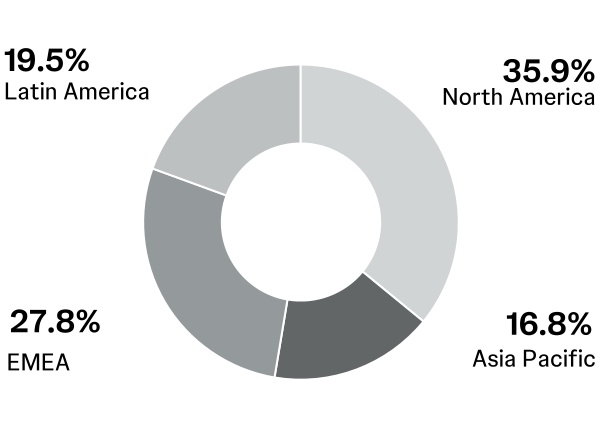
Employees by region (in percentages)
Strategy
The Company believes that its employees are critical to its continued success and are an essential element of its long-term strategy. Management is responsible for ensuring that its policies and processes reflect and reinforce the Company's desired corporate culture, including policies and processes related to strategy, risk management, and ethics and compliance. The Company’s human capital management strategy is built on three fundamental focus areas:
•Attracting and recruiting top talent
•Developing and retaining top talent
•Empowering and inspiring talent
Underpinning these focus areas are ongoing efforts to cultivate and foster a culture built on innovation, health, well-being and safety, inclusion and belonging where the Company's employees are encouraged to succeed both professionally and personally while helping the Company achieve its business goals.
Culture and employee engagement
At Johnson & Johnson, employees are guided by Our Credo, which sets forth the Company's responsibilities to patients, consumers, customers, healthcare professionals, employees, communities and shareholders. Employees worldwide must adhere to the Company’s Code of Business Conduct, which sets fundamental requirements and serves as a foundation for the Company policies, procedures and guidelines, all of which provide additional guidance on expected employee behaviors in every market where it operates. The Company conducts global surveys that offer its employees the ability to provide feedback and valuable insight to help address potential human resources risks and identify opportunities to improve. In 2025, 95% of global employees across 73 countries participated in Our Credo Survey which was offered in 36 languages.
Growth and development
To lead in the changing healthcare landscape, it is crucial that the Company continue to attract and retain top talent. In 2025, the Company's voluntary turnover rate was 5.8%. The Company believes that its employees must be equipped with the right knowledge and skills and be provided with opportunities to grow and develop in their careers. Accordingly, professional development programs and educational resources are available to all employees. The Company's objective is to foster a learning culture that helps shape each person’s unique career path while creating a robust pipeline of talent to deliver on the Company’s long-term strategies. In furtherance of this objective, the Company deploys a global approach to ensure development is for everyone, regardless of where they are on their career journey. To prioritize learning, the Company has an annual Global Learning Day in which employees are encouraged to set aside a full day to explore skill-building courses on its state-of-the-art learning platform, J&J Learn.
Our workforce
As stated in Our Credo, we are responsible to our employees who work with us throughout the world. As a result, and as guided by applicable laws, external insights and employee feedback, we continually strive to meet the needs of our global workforce of individuals from many different backgrounds, abilities, cultures and perspectives. We are committed to cultivating an inclusive, Credo‑based work environment where employees are recognized and rewarded based on merit.
Compensation and benefits
As part of the Company's total rewards philosophy, the Company offers competitive compensation and benefits to attract and retain top talent. The Company is committed to fair treatment in its compensation and benefits for employees at all levels. The Company observes legal minimum wage provisions and exceeds them where possible. The Company's total rewards offerings include an array of programs to support its employees' well-being, including annual performance incentive opportunities, pension and retirement savings programs, health and welfare benefits, paid time off, leave programs, flexible work schedules and employee assistance programs.
Health, wellness and safety
The Company’s investment in employee health, well-being and safety is built on its conviction that advancing health for humanity starts with advancing the health of its employees. With the right awareness, focus, practices and tools, the Company works to ensure that all its employees around the world, as well as contingent workers, contractors and visitors to the Company's sites, can work safely. The Company has continuously expanded health and well-being programs throughout the Company and across the globe, incorporating new thinking and technologies to keep its offerings best-in-class and to help employees achieve their personal health goals. The programs and practices the Company provides—physical, mental, emotional and financial—help promote holistic employee health. The Company continues to address our employees needs through J&J Flex, a hybrid model that empowers the Company’s office-based employees to find a balance of in-person and remote work, while preserving the Company's culture and need for face-to-face engagement and leadership.
Available information
The Company’s main corporate website address is www.jnj.com. The Company makes its SEC filings available on the Company’s website at www.investor.jnj.com/financials/sec-filings, as soon as reasonably practicable after having been electronically filed or furnished to the SEC. The Company's SEC filings are also available at the SEC’s website at www.sec.gov.
Investors and the public should note that the Company also announces information through its press releases and media statements at www.jnj.com/media-center, investor.jnj.com and www.factsabouttalc.com. We use these websites to communicate with investors and the public about our products, litigation and other matters. It is possible that the information we post to these websites could be deemed to be material information. Therefore, we encourage investors and others interested in the Company to review the information posted to these websites in conjunction with www.jnj.com, the Company's SEC filings, press releases, public conference calls and webcasts.
In addition, the Restated Certificate of Incorporation, as amended, Amended and Restated By-Laws, the written charters of the Audit Committee, the Compensation & Benefits Committee, the Nominating & Corporate Governance Committee, the Regulatory Compliance & Sustainability Committee, and the Science & Technology Committee of the Board of Directors, and the Company’s Principles of Corporate Governance, Code of Business Conduct (for employees), Code of Business Conduct & Ethics for Members of the Board of Directors and Executive Officers, and other corporate governance materials are available on the Company's website at www.investor.jnj.com/governance/corporate-governance-overview and will be provided without charge to any shareholder submitting a written request, as provided above. The information on www.jnj.com, investor.jnj.com and www.factsabouttalc.com is not, and will not be deemed, a part of this Report or incorporated into any other filings the Company makes with the SEC.
| No annotations |
A subscription is required for the below company data including historic share prices, economic, EV bridge, WACC, customizable comparables and earnings forecasts.
Sign up today or log in to your account| 52 week | high $251.71 | low $141.50 |
| Download 5-year share price history | ||
| Economic Data | |
| Historic real GDP growth rate | ?? |
|---|---|
| Forecast real GDP growth rate | ?? |
| Historic inflation rate | ?? |
| Forecast inflation rate | ?? |
| SOFR | ?? |
| US 3 month Treasury Yield | ?? |
| Calculating WACC | ||
| Govt. bond yield* | ?? | |
|---|---|---|
| Eq. risk premium* | ?? | |
| Adj. beta | ?? | |
| Est. cost of equity | ||
| Unlevered beta | ?? | |
| Credit spread* | ?? | |
| Cost of debt | ||
| Credit rating (Moodys/S&P) | ?? | |
| Total debt / capitalization | ?? | |
| Total debt / mkt. cap. | ?? | |
| WACC | ||
| Earnings | |||||
|---|---|---|---|---|---|
| Date | ?? | ?? | ?? | ||
| Revenue ($M) | ?? | ?? | ?? | ||
| Growth | ?? | ?? | ?? | ||
| EBITDA ($m) | ?? | ?? | ?? | ||
| Margin | ?? | ?? | ?? | ||
| EPS ($) | ?? | ?? | ?? | ||
Market data by Finnhub | Earnings forecasts by Factset | Economic data from FRED |
Fundamental data by Financial Edge
Please notify us of any data inaccuracies. All critical data usage must be externally validated.
Please notify us of any data inaccuracies. All critical data usage must be externally validated.